
Steel-Plastic Geogrid Data Sheet: How to Read It Right
By GeoTexGrid Engineering Team
When a steel plastic geogrid quotation arrives, the attached data sheet is the single most important document in the offer — and the one most buyers skim. Two offers that look identical on paper can behave very differently in a compacted base layer. This guide explains what each line item means and which numbers deserve a second look.
What a Steel-Plastic Geogrid Data Sheet Lists
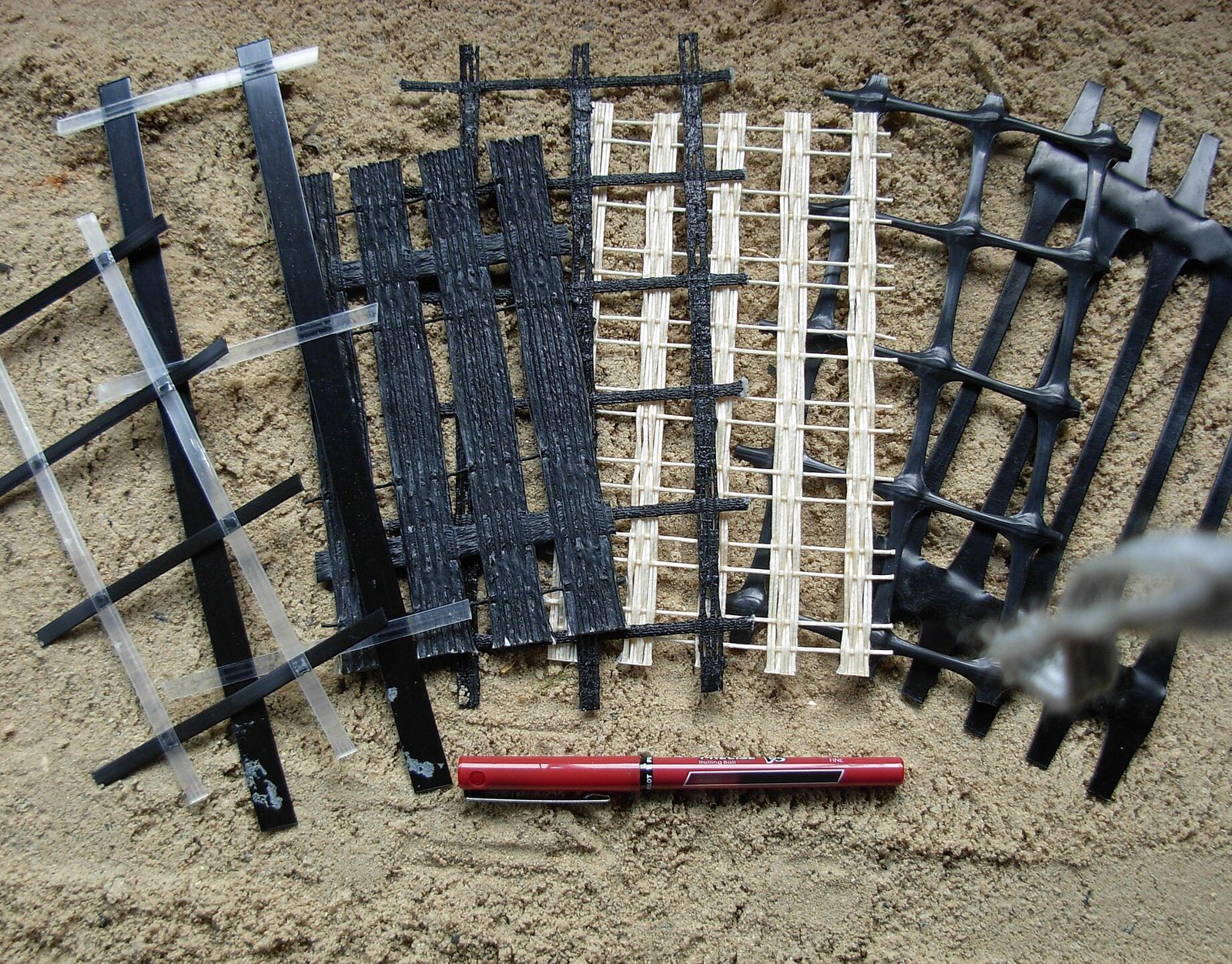
A steel-plastic geogrid is a welded grid of high-tensile steel wires, each wire encapsulated in a polyethylene sheath. The steel carries the load; the coating protects it from moisture and abrasion and defines the final rib geometry. Because that raw material system differs from extruded PP or PET grids, the sheet carries lines specific to this product family: ultimate tensile strength reported separately for machine direction (MD) and cross-machine direction (CMD), elongation at break, weld junction strength relative to rib strength, aperture dimensions, roll width and length, and wire diameter or rib dimensions after coating. If any of these is missing, ask for it in writing before comparing prices.
Geogrid Tensile Strength: kN/m, MD and CMD
The headline number is ultimate tensile strength in kilonewtons per metre — the load one metre width of grid carries before failure, measured by wide-width test per ISO 10319 or ASTM D6637. Always check which standard is cited; narrow-strip and wide-width results are not interchangeable. On a biaxial grade the MD and CMD values are equal, and grades are named after them: a 50-50 grade carries 50 kN/m in both directions.
Steel-Plastic Geogrid Grades We Manufacture: Published Ranges
The table below is the specification range we publish for our own steel-plastic and fiberglass geogrid families — the same figures that appear on the product pages. Use it as a reference point when a quotation claims a "standard" grade: if a supplier's number sits far outside these bands, ask which test method produced it.
| Product | Tensile strength | Grid size / aperture | Roll width | Roll length | Coating or finish | Test standard |
|---|---|---|---|---|---|---|
| Steel-Plastic Biaxial Geogrid | 30–150 kN/m | 12.7mm / 25.4mm / 38.1mm | 1.0 – 3.0 m (custom) | 30 – 50 m | HDPE / LDPE | ASTM D6637, GB/T 19274 |
| Steel-Plastic Uniaxial Geogrid | 50–300 kN/m | Custom (≥ 100mm) | 1.0 – 2.0 m | 30 – 100 m | HDPE | ASTM D6637, GB/T 19274 |
| Fiberglass Geogrid | 30–100 kN/m | 12.7mm / 25.4mm | 1.0 – 2.0 m | by order | Bitumen / Polymer | ASTM D6637, JTG E50 |
| Self-Adhesive Fiberglass Geogrid | 30–80 kN/m | 12.7mm / 25.4mm | 1.0 – 2.0 m | by order | Pressure-sensitive | ASTM D6637, JTG E50 |
Two lines deserve a second look. The biaxial grade tops out at 150 kN/m — a quotation offering "200 kN/m biaxial steel-plastic" is either quoting a uniaxial product or a different test method. And the uniaxial family starts where the biaxial range ends, running 50–300 kN/m; that is the family retaining walls and steep slopes draw from, so never judge a wall offer against the biaxial table.
Elongation: Why ≤ 3% Changes the Design
Elongation at break is where steel-plastic geogrid separates itself most clearly from polymer grids: a PP biaxial grid breaks well above 10% strain, a steel-plastic product at 3% or less. Reinforcement works by restraining lateral spread of aggregate, and that restraint only engages once the grid strains — so a grid that develops strength at 1–3% strain stabilises a layer faster and holds surface deflections down from the first loading cycles. That matters most on soft or wet subgrade, where every millimetre of early movement pumps fines and loses compaction. Treat an elongation figure above 5% as a warning sign: it usually indicates a polymer core, whatever the product name says.
Aperture Size and Soil Interlock
The aperture controls how well the grid grips the aggregate around it. For base reinforcement the goal is for coarse stone to strike through the openings and wedge across the ribs, creating a mechanically interlocked layer. On our own range the published grid sizes are 12.7mm / 25.4mm / 38.1mm for the biaxial grade, while the uniaxial grade is supplied to a custom aperture (≥ 100mm) to suit the fill it must interlock with. Both fiberglass grades use 12.7mm / 25.4mm mesh, which is what asphalt overlay work expects. If your base course uses finer crushed material, ask the supplier to confirm the recommended gradation; if the sheet states no grid size at all, request it — interlock is the entire mechanism by which the product works.
Two Calculations Worth Running Before You Order
1. Rolls per 1,000 m² of base. Coverage follows directly from the width and length on the sheet. At the narrow end of our biaxial range — 1.0 m × 30 m — one roll covers 30 m², so 1,000 m² takes about 33 rolls before overlap. At the wide end — 3.0 m × 50 m — one roll covers 150 m² and the same area takes about 7 rolls. Wider rolls cost slightly more per square metre but remove several hundred metres of seam labour and overlap waste on a 10,000 m² yard. Roll width is therefore not a cosmetic line item: it changes installed cost per square metre even when the price per roll looks identical.
2. Which strength grade the layer needs. Work backwards from the subgrade rather than forwards from the catalogue:
| Subgrade / duty | Landing point in our biaxial range | Why |
|---|---|---|
| Soft, saturated ground, CBR below 3 | 80–150 kN/m | Force must mobilise at 1–3% strain before fines pump |
| CBR 3–8, secondary roads and yards | 50–80 kN/m | Standard base stabilisation duty |
| Temporary access and light platforms | 30–50 kN/m | Lowest survivability demand |
Then confirm the method behind the quoted figure. ASTM D6637 tests multiple ribs together and is the number your design should use; ASTM D7737 pulls a single rib and reads noticeably higher. A supplier quoting D7737 numbers into a D6637 specification is not offering a stronger grid — just a more flattering test.
Creep, Corrosion and the Questions Worth Asking
Because the load-carrying core is steel, creep is negligible at normal operating temperatures; no large creep reduction factor is needed, unlike PET or PP grids. The durability question is therefore corrosion protection — sheath thickness and its bond to the wire. Before confirming an order, ask what the wire diameter and sheath thickness are (thinner wire behind a thick coating reduces strength while looking identical in a photo), whether junction strength is stated as a percentage of rib strength and tested by a third party, which standard is cited, and whether the mill can supply a report for the actual batch rather than a brochure value.
Red Flags When Comparing Wholesale Offers
- Only one tensile number, with no MD/CMD split and no test standard
- Elongation missing, or suspiciously high for a product sold as steel-plastic
- Junction strength not stated at all — welds are the usual failure point
- No grid size given, or one that does not match your aggregate
- No roll width, which hides overlap allowance and inflates installed cost
A supplier who answers these five points in writing is usually the one still answering emails two years after delivery.
Where to Go Next
- Product range and data sheets — Steel-Plastic Biaxial Geogrid covers 30–150 kN/m at 12.7 / 25.4 / 38.1 mm grid sizes, Steel-Plastic Uniaxial Geogrid covers 50–300 kN/m for walls and slopes, and Self-Adhesive Fiberglass Geogrid suits overlay work — or browse the full geogrid product range.
- Talk to an engineer — message us on WhatsApp for a same-day technical answer, or email cn8978688@gmail.com with your data sheet for a line-by-line review.
- Related reading — Steel-Plastic Geogrid vs Fiberglass Geogrid explains which core system suits which structure, and Biaxial Geogrid for Road Base Reinforcement walks through the design and specification process step by step.
GeoTexGrid manufactures steel-plastic, biaxial and fiberglass geogrids with batch-tested, standards-cited data sheets. Send us the project drawing and design load — you will get a confirmed specification and quotation, usually within one working day.
Related Articles
Fiberglass Geogrid China Supplier: Mesh and Coat
How to vet a fiberglass geogrid China supplier: mesh size, bitumen vs polymer coating, and the rib-count arithmetic that proves a 30-100 kN/m datasheet.
Woven Geotextile China Manufacturer: Slit Film
A woven geotextile China manufacturer explains slit film tapes, the grab-versus-wide-width trap, and how roll width changes the area you pay for.
Geocell China Manufacturer: Perforation Surface
Perforated or textured walls decide how a geocell drains and grips. A geocell China manufacturer explains wall options, weld QC and checks before order.