
Fiberglass Geogrid China Supplier: Mesh and Coat
Автор GeoTexGrid Engineering Team
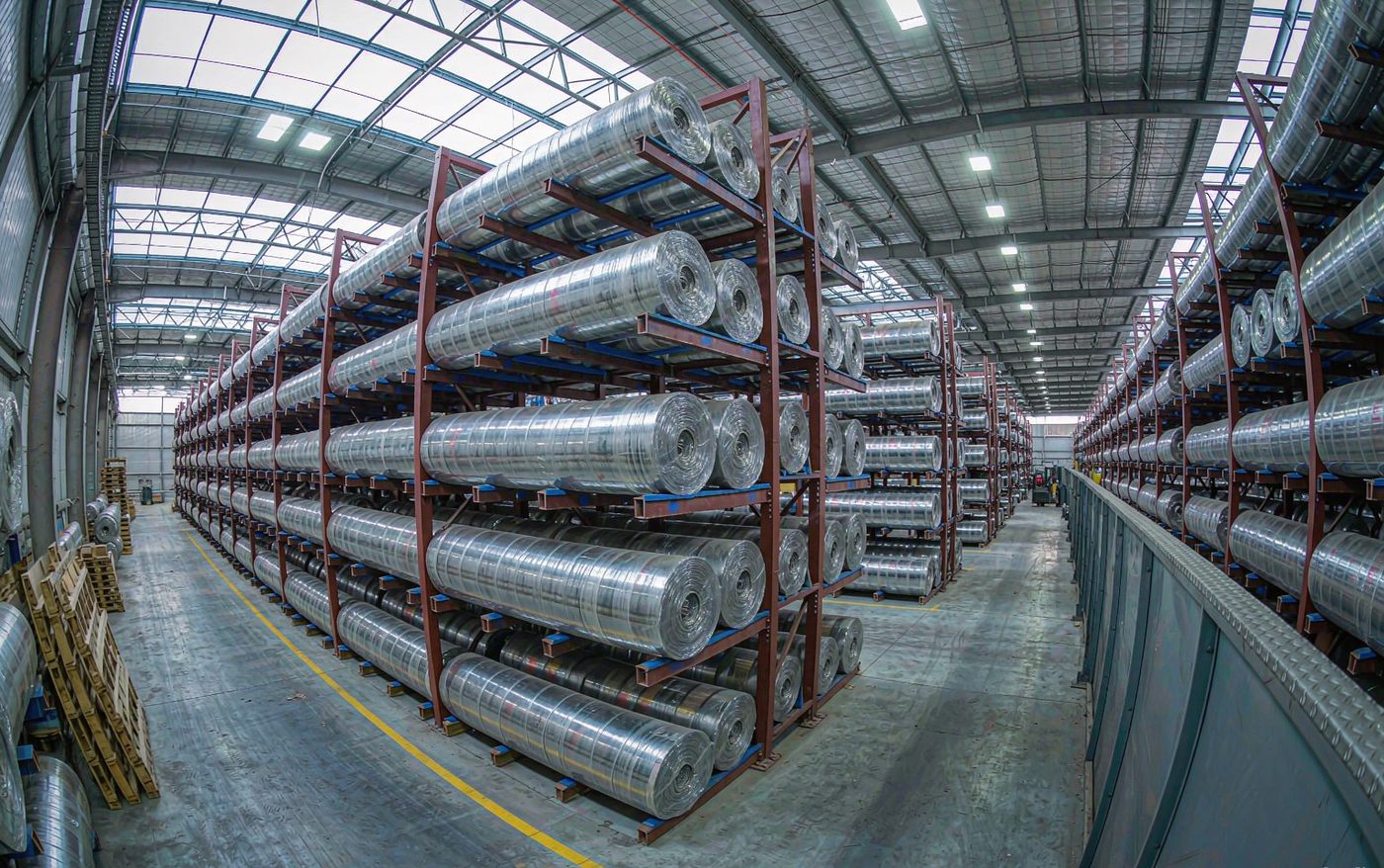
The first question I ask when a fiberglass geogrid enquiry lands in my inbox is simple: what mesh size, and what coating? Nine buyers out of ten answer with a strength figure instead — 50 kN/m, sometimes 80. Strength matters, but it is the third thing I check, not the first. Mesh and coating decide whether the grid survives the paver and bonds with the overlay. Strength only decides how much load it carries afterwards. Get the first two wrong and the best datasheet in the world will not save the job.
So if you are comparing offers from a fiberglass geogrid China supplier, start where our production starts: the weaving hall and the coating line. This article walks through the two checks I would make on any roll before it goes into a container — and the arithmetic that proves the strength claim is real.

Mesh Size: Match the Grid to the Stone
Our fiberglass geogrid comes in two mesh sizes: 12.7 mm and 25.4 mm. The number matters because the grid works by interlocking with aggregate, not by gluing to it. Ribs that sit too close together under a coarse chip seal leave the stones bridging the grid instead of punching through it. Stones that punch through and seat against the ribs are what transfer load into the grid.
The 25.4 mm grid — one inch, in imperial terms — gives larger stones room to strike through. The 12.7 mm grid packs more ribs into every metre, which spreads load across more junctions on a finer surface course. Neither one is "better". Ask what aggregate you are paving over, then ask which mesh puts ribs where the stones will actually land.
One more practical point buyers miss: mesh size also sets rib density, and rib density is how you audit the strength claim. Hold that thought for the arithmetic below.
Coating: Bitumen or Polymer?
Glass fibre does not stretch — every grade we weave holds elongation at ≤ 4% — and that stiffness is exactly why asphalt engineers want it under an overlay. But bare glass is brittle and hates abrasion. Uncoated ribs would be shredded the first time a chip spreader crossed them. The coating is the working part of the product.
We offer two coating systems on our fiberglass geogrid: bitumen and polymer. A bitumen-coated grid belongs under a hot overlay with a tack coat — the coating and the tack coat are the same chemistry family, so the bond forms as the mat is paved. A polymer-coated grid gives up a little of that chemical affinity and buys a tougher skin against handling: re-rolling, summer storage in a yard, the drag of laying in wind. Neither is a shortcut choice; they are different failure budgets. Tell your supplier where the roll will be stored and what tack rate you run. A mill that only asks for "the kN/m number" is not engineering your project.
Fiberglass Geogrid Data: What Our Datasheet Shows
Here is the fiberglass family side by side, plus the steel-plastic biaxial grid we weave for base-course work, all taken from our published product specifications:
| Product | Tensile strength | Elongation | Mesh / grid size | Roll width | Coating / bond | Test standard |
|---|---|---|---|---|---|---|
| Fiberglass geogrid | 30–100 kN/m | ≤ 4% | 12.7 / 25.4 mm | 1.0–2.0 m | Bitumen / polymer | ASTM D6637, JTG E50 |
| Self-adhesive fiberglass geogrid | 30–80 kN/m | ≤ 4% | 12.7 / 25.4 mm | 1.0–2.0 m | Pressure-sensitive adhesive | ASTM D6637, JTG E50 |
| Steel-plastic biaxial geogrid | 30–150 kN/m | — | 12.7 / 25.4 / 38.1 mm | 1.0–3.0 m (custom) | HDPE / LDPE jacket | ASTM D6637, GB/T 19274 |
Read the top two rows together. The self-adhesive version gives up 20 kN/m at the top of the range because the pressure-sensitive layer takes rib thickness away from the glass — that is the trade, not a defect. What you buy back is installation speed on a milled surface, which we covered in the self-adhesive roll spec guide. The steel-plastic row is a different animal entirely: jacketed steel strands for unbound base layers, not asphalt, and the full steel-plastic data sheet breakdown explains why.
Verify the Claim: Rib-Count Arithmetic
This is the check that separates a fiberglass geogrid China manufacturer from a trading company with a PDF. The multi-rib tensile test in ASTM D6637 (Method B) reports force per rib. Converting to kN/m needs the number of ribs per metre — and that comes straight from the mesh:
- 25.4 mm mesh: 1000 ÷ 25.4 ≈ 39 ribs per metre. A 100 kN/m grade needs about 2.56 kN per rib (39 × 2.56 ≈ 100).
- 12.7 mm mesh: 1000 ÷ 12.7 ≈ 78.7 ribs per metre. A 30 kN/m grade needs about 0.38 kN per rib.
Run this on any quote you receive. If a supplier offers 100 kN/m on a 25.4 mm grid but cannot state rib force and rib count, the figure cannot be verified — ask for the test report to ASTM D6637 or the Chinese highway method JTG E50, with the specimen photo attached. The two numbers must be consistent with each other and with the mesh on the roll. When they are, you are talking to the mill that made the grid. When they are not, you are talking to someone who read a catalogue.
When an Asphalt Overlay Fails, Read This Table
Most failed grid projects we are asked to diagnose trace back to one of five things. Symptom first, root cause second:
| Symptom | Likely root cause | What to check |
|---|---|---|
| Reflective cracks return within the first year | Grade too low for the traffic, or grid placed in the wrong lift | Tensile grade against design traffic; placement depth in the mat |
| Overlay delaminates along the grid plane | Tack coat incompatible with the coating system | Coating on the datasheet vs the tack rate actually sprayed |
| Ribs whiten or stretch during paving | Elongation exceeds the ≤ 4% claim | Retest per ASTM D6637; compare rib force against the report |
| Grid tears while unrolling in hot weather | Coating too soft, or fibre damaged by re-rolling and storage | Coating specification; how rolls were stored and re-rolled |
| Strips will not span the lane without joints | Roll width misplanned — our rolls run 1.0–2.0 m wide | Lane width ÷ roll width; count the laps before ordering |
That last row costs nothing to fix at the desk and is miserable to fix on the road. Send the lane dimensions with the enquiry.
Buying Fiberglass Geogrid Direct from a China Source Factory
Why does sourcing from the mill change the product and not just the price? Because mesh and coating are process variables, and the factory that runs the warping creel and the coating line can adjust them to your job. As a source factory, we cut roll widths anywhere in the 1.0–2.0 m band to match your lane plan, hold every production batch against ASTM D6637 and JTG E50 before it ships, and quote factory direct without a trading layer adding margin on a product it has never touched. For trial orders, one pallet of fiberglass geogrid rides LCL alongside other geosynthetics China buyers routinely consolidate — you can validate the mesh, the coating and the paperwork before a full container is worth discussing.
Send us your aggregate size, lane width and overlay design. You will get a mesh and coating recommendation with the test report behind it, usually within one working day.
Where to Go Next
- Full specifications and roll options — see the fiberglass geogrid product page for grades from 30 to 100 kN/m, or the self-adhesive version for milled-surface work.
- Talk to an engineer — message us on WhatsApp for a same-day technical answer, or email cn8978688@gmail.com.
- Related reading — Fiberglass Geogrid for Asphalt Overlay explains how the grid stops reflective cracking step by step.
GeoTexGrid manufactures fiberglass and steel-plastic geogrid in our own plant, tests every batch in our quality control laboratory, and ships worldwide. Send your drawing and design load — you will get a confirmed specification and quotation, usually within one working day.
Похожие статьи
Woven Geotextile China Manufacturer: Slit Film
A woven geotextile China manufacturer explains slit film tapes, the grab-versus-wide-width trap, and how roll width changes the area you pay for.
Geocell China Manufacturer: Perforation Surface
Perforated or textured walls decide how a geocell drains and grips. A geocell China manufacturer explains wall options, weld QC and checks before order.
HDPE Geomembrane Welding China: Seam QC Checklist
HDPE geomembrane welding in China: dual-track vs extrusion, lap and seam-length arithmetic, sample frequency, and the defects that actually leak.