
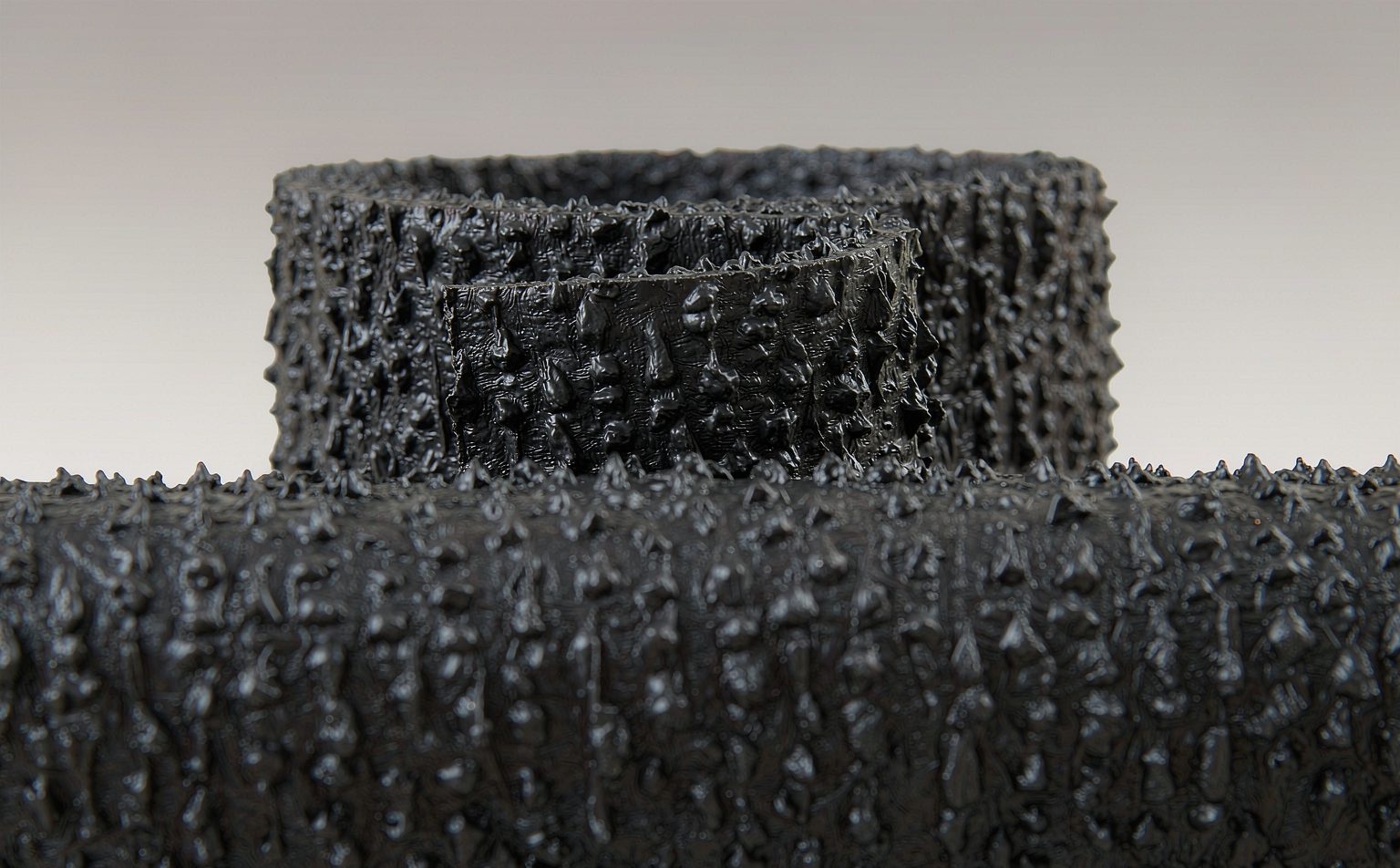
Textured Geomembrane
Coarsely textured HDPE geomembrane providing high interface friction for steep slopes and secure liner stability.
Indicative Price Range
USD 1.00 - 3.30 / m²
Indicative factory range per m2. Final price depends on thickness or unit weight, roll width and order volume. Send us your specification and we will return a firm factory-direct quote within 24 hours.
Product Description
Textured geomembrane is HDPE sheet whose surface is coarsened (single or double side) to raise the interface friction angle. On steep slopes, smooth membrane can slip along the interface under load; the textured surface locks into the adjacent soil or geotextile and keeps the liner system stable.
When do you actually need textured? The trigger is slope geometry and interface materials, not personal preference. Smooth HDPE is normally adequate on slopes flatter than about 1:3 (roughly 18 degrees) where the liner bears against well-compacted soil. Once the slope steepens past that, or where the liner sits against a smooth geotextile or a geosynthetic clay liner with a low friction angle, the interface becomes the weak plane and the cover soil will slide. Texturing raises the interface friction angle enough to keep the veneer stable in exactly those cases. If your design is flat, buying textured sheet is unnecessary cost - we will tell you honestly which one your cross-section needs.
Single-side or double-side? Single-sided texturing is used when only one interface governs stability - typically the underside against the subgrade, with a drainage layer above that does not need extra friction. Double-sided texturing is specified when stability must be checked on both faces, such as a liner sandwiched between a GCL below and a drainage geocomposite above. Where the critical interface is the upper one, ordering the wrong side textured is a costly field error, so confirm the critical interface before ordering.
Installation differences worth knowing. The embossed surface traps dust and moisture, so seams must be prepared: the texture is removed by light grinding or scraping along the weld path until the underlying smooth polymer is exposed, and the strip is cleaned before welding. Skipping this step is the most common cause of failed seams on textured liners. Welding then uses the standard dual-track hot wedge with an air channel, and we supply the grinding and cleaning detail plus a weld parameter window for the thickness supplied.
Standards and documentation. Our textured geomembrane is produced to GRI-GM13 requirements for the base sheet, with asperity height measured and reported - asperity height is the property that actually governs friction performance, so it belongs in the certificate package alongside thickness, density, tensile and elongation. Interface shear strength against your specific adjacent material can be tested by direct shear before the project starts, and third-party inspection is available through SGS, BV or Intertek.
The base resin and chemical resistance are the same as smooth HDPE - texturing changes friction, not barrier performance.
Send us your slope geometry and liner cross-section - our team will advise on textured versus smooth placement, and confirm supply and lead time within 24 hours.
Key Features
- High interface friction angle for slope stability
- Single- or double-side texturing
- Same chemical resistance as smooth HDPE
- Reduces risk of liner slippage on steep faces
- Compatible with standard dual-track wedge welding
- Asperity height measured and certified per lot
- Suitable for veneer stability on steep side slopes
- Mill certificates and third-party inspection available
Applications
- •Steep landfill slope liners
- •Mining heap leach pads
- •Cover systems on sloped ground
- •Vertical and near-vertical walls
- •Any liner on slopes where smooth membrane slips
- •Reservoir and dam faces above 1:3
- •Road and railway embankment waterproofing
- •Retaining structure and basement tanking
Technical Specifications
- Material
- HDPE, coarsened (textured) surface
- Texturing
- Single-side / double-side
- Thickness Range
- 1.0 - 2.0 mm (smooth core)
- Asperity Height
- Measured and reported per lot
- Interface Friction
- Direct shear testing available
- Roll Width
- Up to 8 m, custom slit on request
- Weld Prep
- Grind and clean along weld path before welding
- Standard
- GRI-GM13 base sheet
Related Products
HDPE Geomembrane
Smooth HDPE geomembrane with outstanding chemical resistance and very low permeability for landfill, mining and water containment.
LLDPE Geomembrane
Flexible LLDPE geomembrane that follows settlement and irregular shapes without stress cracking.
Composite Geomembrane
Geomembrane bonded with nonwoven geotextile on one or both sides - impermeability and puncture protection in a single layer.
Related Technical Articles
Textured Geomembrane for Steep Slope Lining: Spec Guide
Choose the right textured geomembrane for steep slope lining: interface friction, one-side versus double-side texturing, anchoring and slope angle checks.
Geotextile for Landfill Liner Protection: Design Guide
How to specify nonwoven geotextile for landfill liner protection: mass per area, puncture resistance and interface friction values that keep HDPE intact.
HDPE Geomembrane for Fish Pond: Thickness and Cost
Specify HDPE geomembrane for fish pond lining by exposure: thickness classes, sheet options, seam testing and the cost drivers behind each quote.