
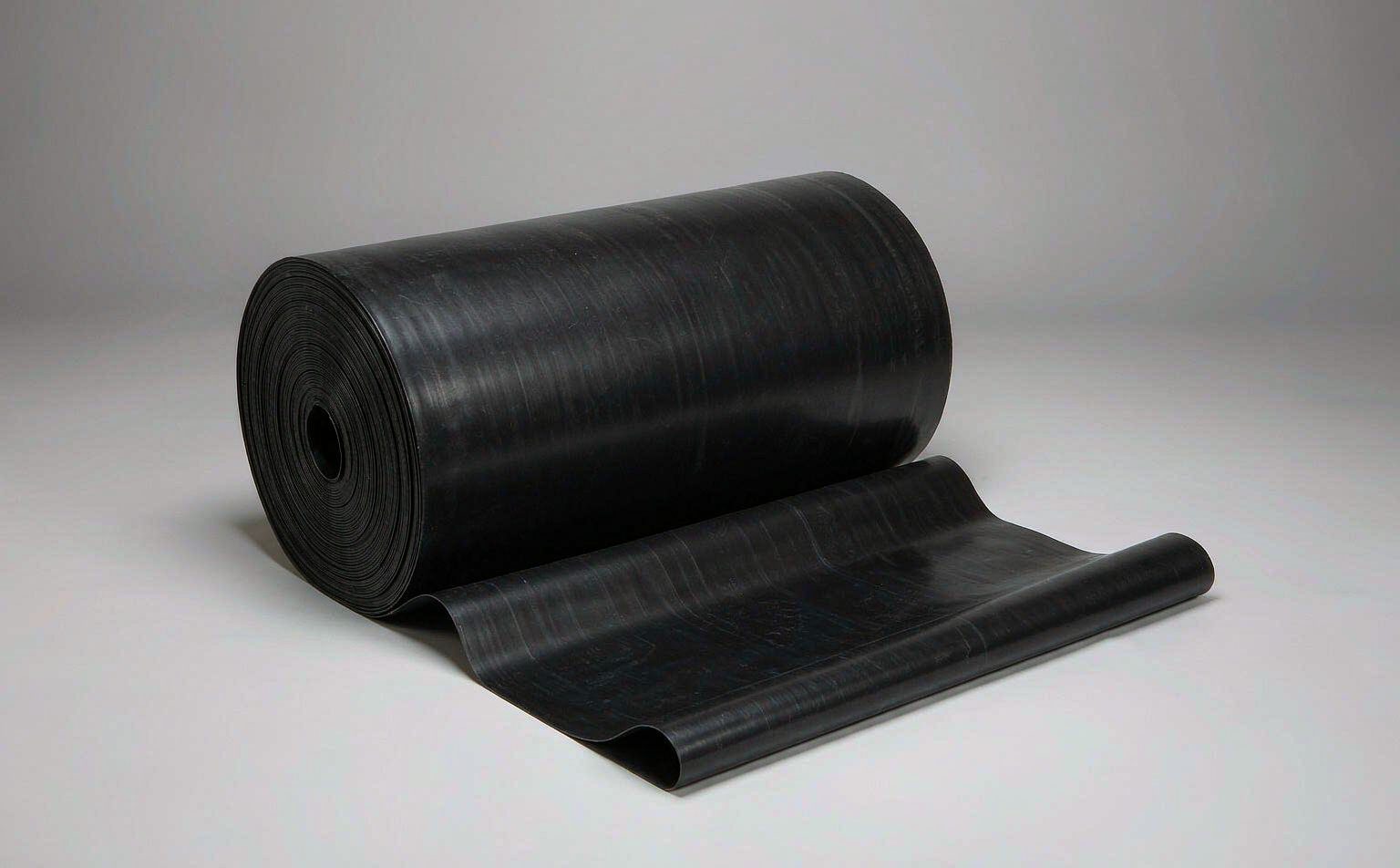
LLDPE Geomembrane
Flexible LLDPE geomembrane that follows settlement and irregular shapes without stress cracking.
Indicative Price Range
USD 0.80 - 3.20 / m²
Indicative factory range per m2. Final price depends on thickness or unit weight, roll width and order volume. Send us your specification and we will return a firm factory-direct quote within 24 hours.
Product Description
LLDPE geomembrane trades some chemical resistance for much higher flexibility. Its excellent elongation lets it follow differential settlement, irregular subgrade shapes and temperature movement without the stress cracking that stiffer sheets can suffer, and it performs reliably at low temperatures.
LLDPE or HDPE? They solve different problems. Choose LLDPE when the subgrade will move - freshly placed fill, soft foundation soil, or a site with large daily temperature swings - because elongation above 700% lets the sheet stretch over a void or a settling pocket instead of tearing at the seam. Choose HDPE when the contained liquid is chemically aggressive, because HDPE's higher crystallinity resists leachate and solvents better. On flat, well-prepared subgrades with aggressive chemistry, HDPE wins; on uneven or moving ground with mild chemistry, LLDPE wins. If you need both flexibility and cushioning, our composite geomembrane bonds a protective geotextile to the sheet so puncture and interface friction stop being the limiting factors.
Which thickness and finish? Irrigation ponds and reservoir liners typically run 0.5 mm to 1.0 mm, where the sheet only has to bridge minor subgrade irregularities. Floating covers run 0.75 mm to 1.0 mm, since the material works in tension rather than against a hard substrate. Landfill daily and intermediate covers are commonly 0.5 mm to 1.0 mm. Tell us the subgrade preparation method, whether the sheet will be covered or exposed, and the expected settlement - we size the thickness from those three answers, because over-specifying an LLDPE liner usually buys nothing and only adds cost.
Welding LLDPE is not the same job as welding HDPE. The lower melting point and higher flexibility give a narrower temperature window and a slower wedge speed; running an HDPE parameter set on LLDPE is the most common cause of cold seams and false-pass air tests on site. We ship a recommended wedge temperature and speed window for the exact thickness and resin you buy, together with test strips so your crew can qualify the machine each morning before production welding starts. For field seams we recommend the same dual-track hot wedge with an air channel so every metre stays testable, plus extrusion fillet welds at detail points the wedge cannot reach.
Standards and documentation. Our LLDPE geomembrane is produced to GRI-GM17 requirements, with roll-by-roll traceability and mill certificates covering thickness, density, tensile and elongation properties, carbon black content and oxidative induction time. Low-temperature brittleness and stress-crack resistance are the two properties buyers most often ask us to confirm for LLDPE, and we include both in the certificate package on request. Third-party inspection before shipment can be arranged through SGS, BV or Intertek.
It is the natural choice for reservoirs, irrigation ponds, floating covers and any containment where the substrate is uneven or expected to move.
Not sure whether HDPE or LLDPE suits your project? Send us the subgrade conditions, the medium being contained and the design life - we will recommend the right material and thickness and confirm lead time within 24 hours.
Key Features
- Much higher flexibility than HDPE
- Excellent elongation follows settlement and movement
- Reliable performance at low temperatures
- Conforms to irregular subgrade surfaces
- Consistent, reliable weldability on site
- Resistant to stress cracking under multi-axial strain
- Wide rolls cut the number of field seams
- Mill certificates per roll, third-party inspection available
Applications
- •Reservoirs and irrigation ponds
- •Tunnel and underground waterproofing
- •Landfill daily and intermediate covers
- •Floating covers for water and liquor
- •Containment works where flexibility matters
- •Landfill base liners on soft or settling ground
- •Mining solution ponds and tailings covers
- •Tank and lagoon linings over uneven subgrades
Technical Specifications
- Material
- Linear low-density polyethylene (LLDPE)
- Surface
- Smooth (textured available on request)
- Thickness Range
- 0.5 - 2.0 mm (stock 0.75 / 1.0 / 1.5 mm)
- Roll Width
- Up to 8 m, custom slit on request
- Roll Length
- 50 - 200 m depending on thickness
- Elongation at Break
- Above 700%
- Low-Temperature Duty
- Retains flexibility in sub-zero service
- Standard
- GRI-GM17
Related Products
HDPE Geomembrane
Smooth HDPE geomembrane with outstanding chemical resistance and very low permeability for landfill, mining and water containment.
Composite Geomembrane
Geomembrane bonded with nonwoven geotextile on one or both sides - impermeability and puncture protection in a single layer.
Textured Geomembrane
Coarsely textured HDPE geomembrane providing high interface friction for steep slopes and secure liner stability.
Related Technical Articles
Geotextile for Landfill Liner Protection: Design Guide
How to specify nonwoven geotextile for landfill liner protection: mass per area, puncture resistance and interface friction values that keep HDPE intact.
HDPE Geomembrane for Fish Pond: Thickness and Cost
Specify HDPE geomembrane for fish pond lining by exposure: thickness classes, sheet options, seam testing and the cost drivers behind each quote.
Geomembrane for Mining: Heap Leach Pad Liner Design
Specify a geomembrane for mining containment: compare HDPE, LLDPE, textured and composite liners for heap leach pads and tailings, with key design checks.