
Self Adhesive Geogrid China Price: Roll Spec
Por GeoTexGrid Engineering Team
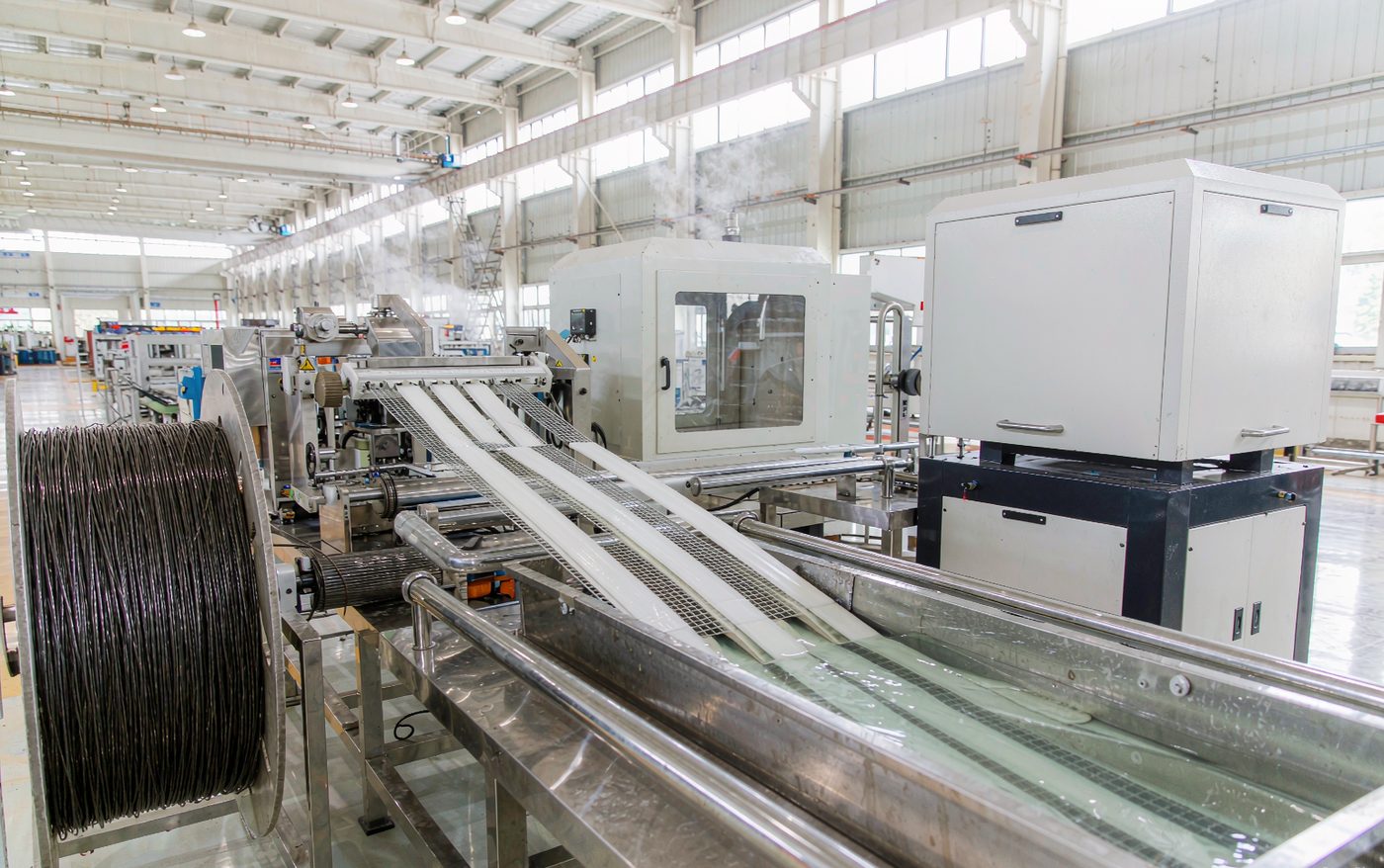
A self adhesive geogrid China price is quoted per square metre, and that one number hides the three things that decide whether the job saves money: the adhesive layer, the roll width you order, and how much grid disappears into laps.
I have quoted this product for years, and the buyers who get hurt are rarely the ones paying the highest rate per m². They are the ones who ordered 1.0 m rolls to trim freight, then paid the difference back in labour and in grid that lifted off the milled surface before the paver arrived.
Why the adhesive exists at all
Loose laid glass grid on a milled carriageway has nothing holding it down. The surface is rough, the wind is free, and the paver may not reach that chainage for two days. A tack coat works, but emulsion needs time to break, and on a night closure nobody wants to wait for it.
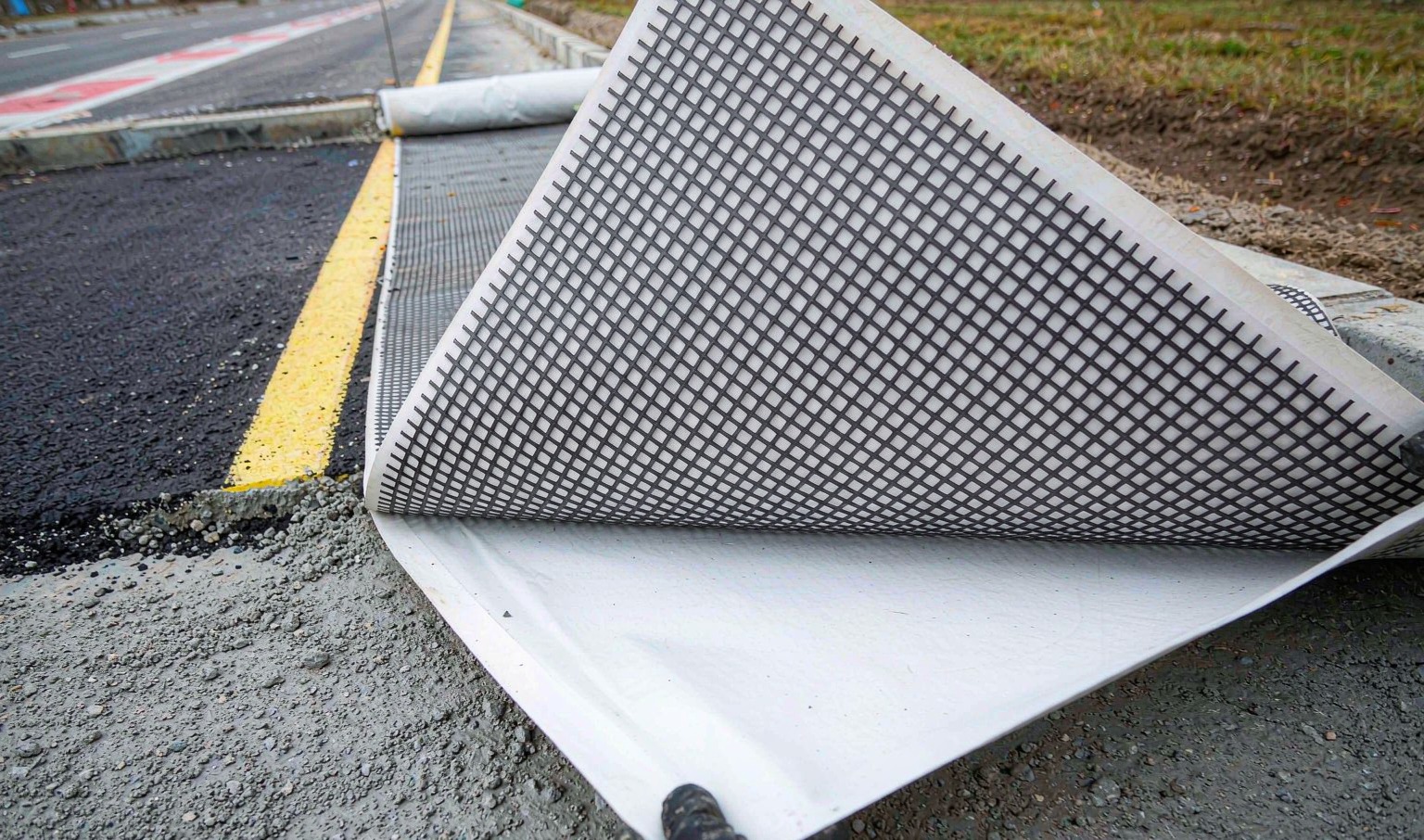
Self adhesive grid replaces that wait with a pressure-sensitive layer under the roll and a release film on top of it. The crew unrolls, peels, presses with a pneumatic tyre roller, and the grid stays put. On a milled surface with a paver queue behind it, that is the whole value — not strength, not stiffness. Position.
What the 30–80 kN/m ceiling tells you about price
Our self-adhesive line runs from 30–80 kN/m. The standard bitumen-coated fiberglass line runs 30–100 kN/m, and steel-plastic biaxial goes to 30–150 kN/m in the same plant. That gap is not marketing: the adhesive and its release film are applied after coating, they add weight and cost per roll, and above a certain warp weight the film starts peeling at the edges before the roll is even opened.
| Product | Tensile strength | Elongation | Mesh / aperture | Roll width | Coating / adhesive |
|---|---|---|---|---|---|
| Self-adhesive fiberglass | 30–80 kN/m | ≤ 4% | 12.7mm / 25.4mm | 1.0 – 2.0 m | Pressure-sensitive |
| Standard fiberglass | 30–100 kN/m | ≤ 4% | 12.7mm / 25.4mm | 1.0 – 2.0 m | Bitumen / Polymer |
| Steel-plastic biaxial | 30–150 kN/m | — | 12.7mm / 25.4mm / 38.1mm | 1.0 – 3.0 m (custom) | HDPE / LDPE |
| Steel-plastic uniaxial | 50–300 kN/m | — | Custom (≥ 100mm) | 1.0 – 2.0 m | HDPE |
So when a buyer asks for self-adhesive at 120 kN/m, the honest answer is that he is asking for a different product. Either he takes the standard roll plus a tack coat, or he moves to steel-plastic and accepts a heavier, stiffer sheet that does not conform to milled texture. If a supplier offers self-adhesive at 150 kN/m, ask which standard the tensile was tested to and whether the figure is MD, CD, or an average. ASTM D6637 and JTG E50 both report per metre width, and both expect you to state direction.
Elongation matters more than the tensile number here. Asphalt fails in tension at strains measured in tenths of a percent, not percent. The ≤ 4% on a glass grid is what keeps a reflective crack from opening wide, which is why the low-elongation roll commands a premium over a plastic grid with twice the kN/m.
Roll width is where the price really moves
Take a 7.5 m lane, one kilometre long: 7,500 m² of grid needed, before laps. With a 150 mm longitudinal lap — the usual figure for glass grid in asphalt — the arithmetic looks like this.
| Roll width | Strips per lane | Longitudinal laps | Lap area | Extra over 7,500 m² |
|---|---|---|---|---|
| 2.0 m | 4 | 3 × 1,000 m | 450 m² | +6.0% |
| 1.0 m | 8 | 7 × 1,000 m | 1,050 m² | +14.0% |
That is 600 m² of extra grid per lane-kilometre, and on a 10 km job it is 6,000 m² — another kilometre of lane, paid for and thrown away. The 1.0 – 2.0 m width range on our line exists for exactly this reason: a 2.0 m roll halves the number of laps, and every lap is a place where the adhesive has to hold two layers instead of one.
Freight is the counter-argument, and it is a real one. Narrow rolls pack tighter and cost less per tonne to move. Run the two numbers against each other before you choose: lap waste is charged at the grid rate, freight at the container rate, and on short sea routes the lap usually wins.
Where the adhesive lets go
Pressure-sensitive adhesive is not glue. It needs clean contact, moderate temperature and a surface with enough flat area to wet out. Five failures account for almost every complaint I have seen on site.
| What you see | Real cause | What to do |
|---|---|---|
| Edges lift within an hour of unrolling | Milled surface still carrying fines and dust | Sweep, then prime; do not rely on the adhesive to bridge dirt |
| Grid slides when the roller passes | Surface moisture or light rain before laying | Wait for dry surface; adhesive will not bond through a water film |
| No grab at all, film peels cleanly | Ambient below roughly 5 °C, adhesive too stiff | Store rolls warm, lay in the warmest part of the day |
| Only high points of the milled surface stick | Texture depth over about 10 mm, contact area too small | Fine mill the surface, or add a light tack coat under the grid |
| Grid rucked and folded under the paver | Site traffic crossing laid grid before overlay | Close the lane, or roll it down and re-press before paving |
None of these are product defects, and none of them show up in a per m² quotation. They show up in the labour line, three weeks later.
What to put in the purchase order
The self adhesive geogrid China price you compare should be attached to a written spec, not a photo of a roll. Ask any fiberglass geogrid China supplier for these, in writing, before the proforma:
- Tensile strength stated separately for MD and CD, tested to ASTM D6637, with elongation ≤ 4%.
- Mesh size in millimetres — 12.7mm and 25.4mm are the two we run; a nominal "glass grid" without a mesh figure is not a specification.
- Roll width and whether it is measured over the coated edge, plus gross roll weight.
- Adhesive type (pressure-sensitive) and whether a release film is supplied, since film-off rolls cannot be stored stacked.
- One batch test certificate per production lot, and roll labels carrying lot number, width and tensile.
Then the commercial side: MOQ per width, whether the mill will consolidate two widths into one LCL shipment, and what a 40'HQ takes at your roll size. A source factory will answer all of it in one email. A trader will answer the price and go quiet on the rest — which is the fastest test I know for telling the two apart, and the reason we publish our line range instead of a single "best price".
We are a factory in China, not a trading desk, so factory direct means the roll that was coated on Tuesday is the roll on the pallet on Thursday. For a product where the adhesive is the whole point, that gap matters.
Where to Go Next
- Product data — the self-adhesive fiberglass geogrid page carries the full roll spec, and the standard fiberglass geogrid page covers the bitumen-coated grades up to 30–100 kN/m.
- Compare before you specify — fiberglass geogrid for asphalt overlay explains how the grid controls reflective cracking, and geogrid price per square meter breaks down what sits inside a quoted rate.
- Talk to an engineer — send the lane width, the milled texture depth and the overlay thickness on WhatsApp and you will get a roll layout back the same day, or email cn8978688@gmail.com.
Send the drawing and the chainage, and the quotation comes back with the lap waste already counted — usually within one working day.
Artículos relacionados
Fiberglass Geogrid China Supplier: Mesh and Coat
How to vet a fiberglass geogrid China supplier: mesh size, bitumen vs polymer coating, and the rib-count arithmetic that proves a 30-100 kN/m datasheet.
Woven Geotextile China Manufacturer: Slit Film
A woven geotextile China manufacturer explains slit film tapes, the grab-versus-wide-width trap, and how roll width changes the area you pay for.
Geocell China Manufacturer: Perforation Surface
Perforated or textured walls decide how a geocell drains and grips. A geocell China manufacturer explains wall options, weld QC and checks before order.