
Custom Size Geosynthetics: Roll Width and Cutting Guide
Por GeoTexGrid Engineering Team
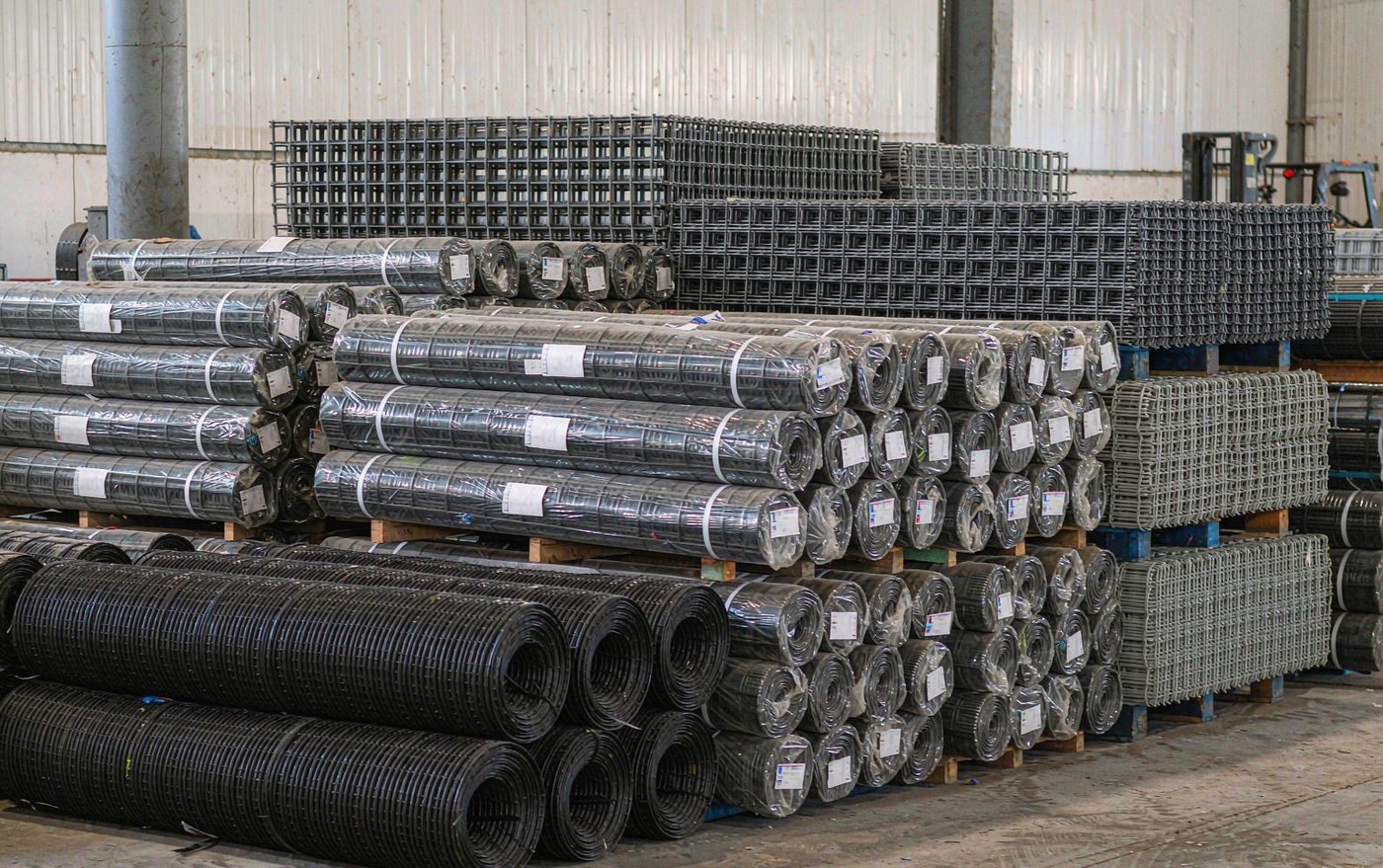
A reinforcement drawing that shows 9,600 m² of geogrid can arrive as 12,000 m² of delivered material once laps, roll-end trim and width round-ups are counted. This guide explains how custom size geosynthetics are specified: the roll widths and lengths each product family is supplied in, how to calculate laps and cutting waste before ordering, and which parts of the specification are fixed by the standard rather than chosen by the buyer.
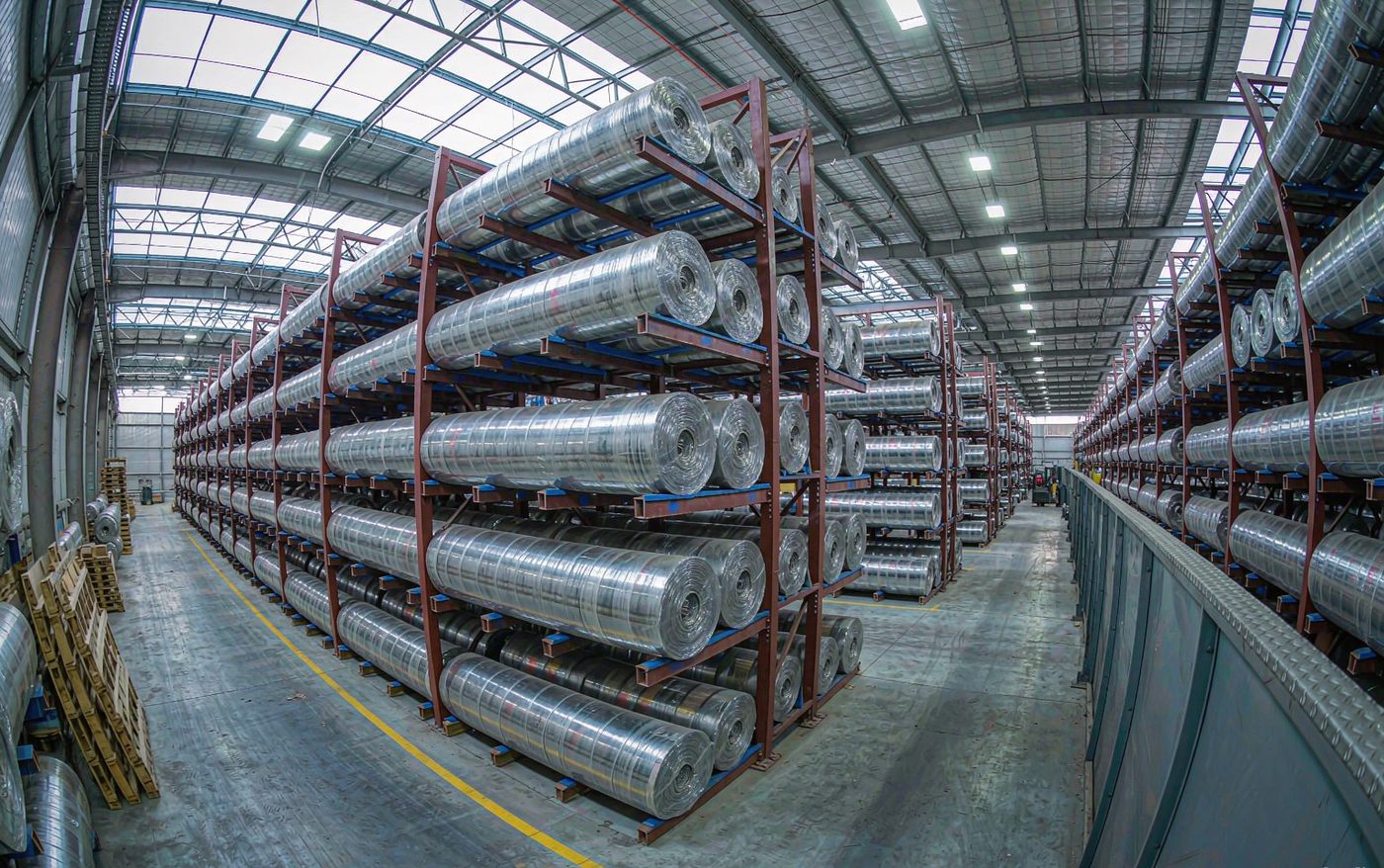
Why Roll Geometry Costs More Than the Unit Price
Geosynthetics are bought in rolls but designed in square metres, and the gap between the two is where money disappears:
- Laps. Adjacent strips are overlapped, not butted — typically 0.15–0.30 m for geogrid — so installed width is narrower than nominal width.
- Roll-end trim. If the panel length is not an exact multiple of the roll length, the last piece of every strip is partly wasted.
- Width round-up. Panel width rarely divides exactly by the roll width, so the final strip is partly surplus.
None of this appears on the design drawing; all of it appears on the delivery note. The highest-leverage custom-size decision is therefore to set the roll width so that an integer number of strips covers the panel width — the material is cut to the job instead of the job being fitted to a stock width.
Custom Roll Width and Length by Product Family
Width and length are production variables; tensile grade is not. This table lists what our steel-plastic and fiberglass geogrid range and geotextile range are supplied in before any project-specific cutting.
| Product family | Roll width as supplied | Roll length | Tensile grade |
|---|---|---|---|
| Steel-plastic biaxial geogrid | 1.0 – 3.0 m (custom) | 30 – 50 m | 30–150 kN/m |
| Steel-plastic uniaxial geogrid | 1.0 – 2.0 m | 30 – 100 m | 50–300 kN/m |
| Fiberglass geogrid | 1.0 – 2.0 m | Cut to order | 30–100 kN/m |
| Fiberglass geogrid, self-adhesive | 1.0 – 2.0 m | Cut to order | 30–80 kN/m |
| Nonwoven geotextile | Customizable | Customizable | Needle-punched nonwoven (PET / PP) |
| Woven geotextile | Customizable | Customizable | Woven PP slit film / PET yarn |
Two rules sit behind it. First, tensile grade comes from the product's certified range and is verified per ASTM D6637 and GB/T 19274 for steel-plastic geogrid, or per ASTM D6637 and JTG E50 for fiberglass — a wider roll does not change the grade. Second, elongation is a polymer property, not a cutting variable: fiberglass geogrid stays at ≤ 4% whatever width it is slit to. A custom width is a slitting decision on a master roll, so freeze it before production is scheduled; change it after cutting and the run is scrap.
Aperture and Mesh: What a Custom Order Cannot Change
Aperture comes from the mould or the weave, so it is chosen from a fixed set rather than cut to size, and it must match the aggregate or soil it interlocks with.
| Product | Aperture / mesh as supplied | What it controls on site |
|---|---|---|
| Steel-plastic biaxial geogrid | 12.7mm / 25.4mm / 38.1mm | Aggregate interlock in base and subbase |
| Steel-plastic uniaxial geogrid | Custom (≥ 100mm) | Rib spacing and how fast the grid mobilises |
| Fiberglass geogrid | 12.7mm / 25.4mm | Binder and tack coat coverage in overlays |
| Nonwoven geotextile | Apparent opening size (AOS) selected to the soil | Filtration and clogging resistance per ASTM D4751 |
For granular layers the working rule is aperture at roughly 1–3 × D50 of the base course, so stones strike through and lock while the ribs carry load. If the aperture is smaller than the aggregate, the grid stops being a reinforcement layer — the stones sit on it like a mat.
How to Calculate Rolls, Laps and Custom Cutting Waste
Take a typical project condition: a reinforced haul-road base 480 m long and 20 m wide, a net design area of 9,600 m², with geogrid supplied in 2.0 m × 50 m rolls.
- Nominal area per roll: 2.0 m × 50 m = 100 m².
- Strips across the width: 20 m ÷ 2.0 m = 10 strips exactly, but 10 strips edge to edge means 9 lap joints at 0.30 m (2.70 m of lap), leaving only 17.30 m covered — short of 20 m. Round up to 12 strips: 24.0 m − 3.30 m = 20.70 m covered.
- Rolls along each strip: 480 m ÷ 50 m = 9.6, so 10 rolls per strip, with 20 m left on the final roll.
- Total: 12 × 10 = 120 rolls, or 12,000 m² supplied against 9,600 m² net design.
That 25% uplift is the price of laps and roll ends, and it decomposes cleanly:
- Lap area: 11 laps × 0.30 m × 480 m = 1,584 m² (16.5% of net area)
- Roll-end trim: 12 strips × 20 m × 2.0 m = 480 m² (5.0%)
- Width margin: 0.70 m × 480 m = 336 m² (3.5%)
The lever is width. Steel-plastic biaxial geogrid is supplied up to 1.0 – 3.0 m (custom), so rerun the check at 3.0 m: seven strips gives 19.20 m, still short, so 8 strips are needed, covering 21.90 m. Roll count falls to 80 rolls and lap area to 1,008 m² — a 36% cut in lap waste for the same net design area, with fewer strips, fewer joints and a shorter installation programme.
Container Loading and Lead Time for Custom Rolls
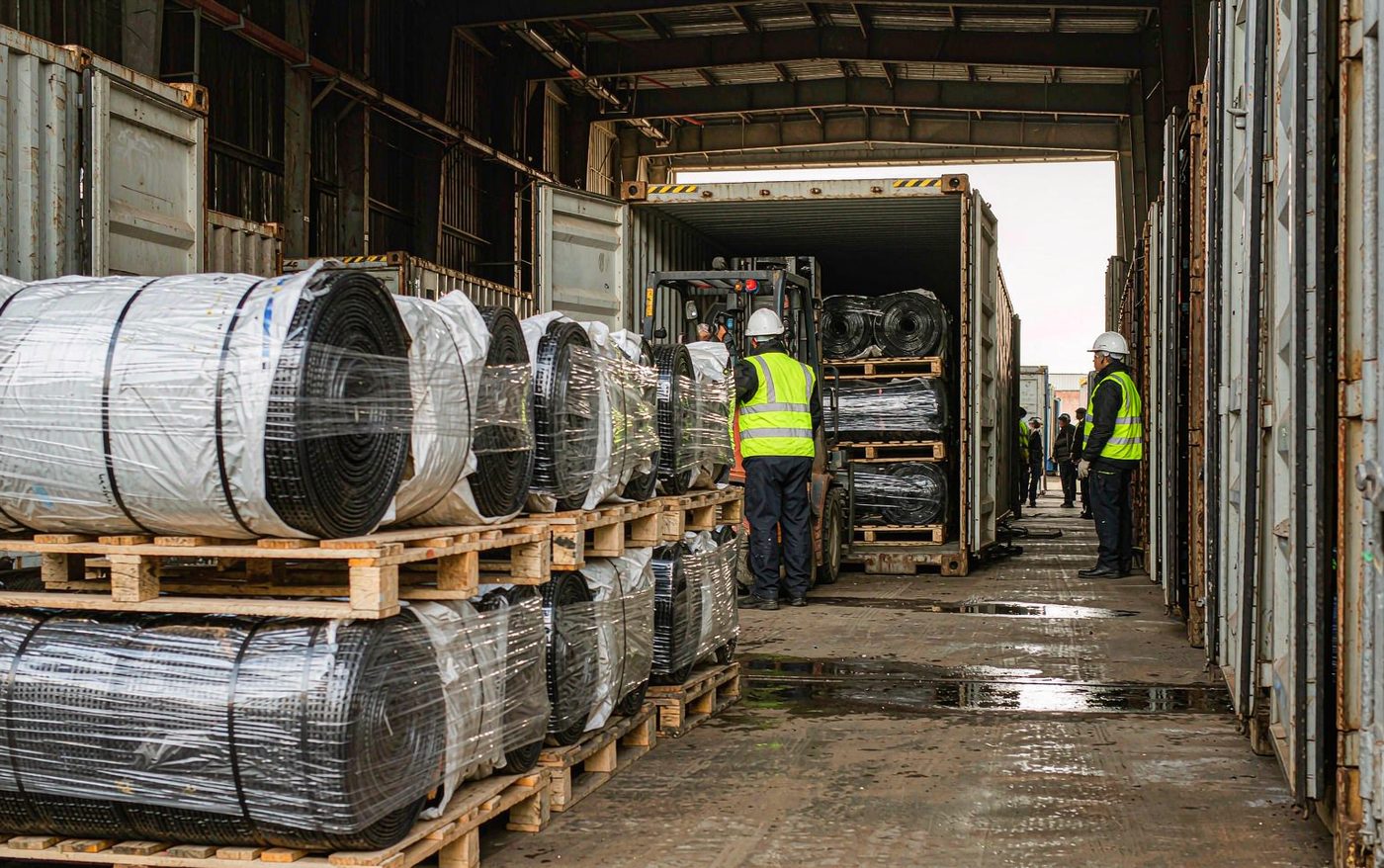
Roll geometry also decides how the material ships. A 40-foot high-cube measures about 12.03 × 2.35 × 2.69 m internally, and a 2.0 m roll lies across its width, so the floor takes 12.03 ÷ roll diameter positions and the stack takes 2.69 ÷ roll diameter layers. At 0.40 m diameter that is 30 × 6 = 180 rolls theoretical, or roughly 150 rolls at practical packing efficiency; at 0.45 m it falls to about 110 rolls. The 120-roll job above is therefore one container — one order, one loading, one clearance cycle. Roll diameter changes with tensile grade, so ask for the diameter of the exact grade you are buying.
Rolls wider than about 2.3 m cannot lie across the container and load lengthwise instead — about 100 rolls at practical efficiency, so the 80-roll wide option still fits in one container.
For lead time, secure two dates in writing before the site programme is fixed: the material-ready date and the loading date. Standard widths move on a normal production cycle; a non-standard width adds a slitting or dedicated-run step that is only scheduled once the width is frozen, and freezing it late is the most common reason a custom-size order slips a programme.
Sizing Mistakes That Show Up on Site
Most sourcing complaints trace back to a sizing decision made weeks earlier, not to a manufacturing defect:
| Symptom on site | Sizing decision behind it | Fix on the next order |
|---|---|---|
| Quote far above the drawing area | Roll width not matched to panel width, so laps and round-ups compound | Set the roll width as an integer division of the panel width |
| Roll too heavy or too wide for the machine on site | Width chosen from the drawing, not from the handling equipment | Match roll width to the unroller and crew, or split into lighter rolls |
| Stones sit on top of the grid with no interlock | Aperture too small for the aggregate D50 | Size aperture at roughly 1–3 × D50 and confirm tensile per ASTM D6637 |
| Laps drift and strips run out of parallel | Slitting tolerance or winding tension not specified | Write a width tolerance and core diameter into the purchase order |
| Drainage fabric clogs in the first season | AOS selected against the wrong end of the soil curve | Re-select AOS per ASTM D4751 using the actual fines content |
Read that table as a procurement checklist: every fix in the right-hand column belongs in the purchase order before the material is cut.
Custom Geosynthetics: Where to Go Next
- Product range and data sheets — see the full geosynthetics product range for steel-plastic biaxial geogrid, steel-plastic uniaxial geogrid, fiberglass geogrid, nonwoven geotextile and woven geotextile roll options.
- Talk to an engineer — message us on WhatsApp for a same-day answer on roll width and lap allowance, or send your panel layout and quantities to cn8978688@gmail.com.
- Related reading — Geogrid Price per Square Meter explains what moves the unit rate, Geogrid Specification: Aperture Size and Tensile Strength covers aperture selection, and How to Choose a Reliable Geogrid Supplier in China lists the documents to ask for.
GeoTexGrid manufactures steel-plastic and fiberglass geogrid, and woven and nonwoven geotextile, cut to your panel width and roll length with slitting tolerances stated on the certificate. Send your layout, the required tensile grade and the panel width to cn8978688@gmail.com — you will get a confirmed roll schedule, container plan and quotation, usually within one working day.
Artículos relacionados
Fiberglass Geogrid China Supplier: Mesh and Coat
How to vet a fiberglass geogrid China supplier: mesh size, bitumen vs polymer coating, and the rib-count arithmetic that proves a 30-100 kN/m datasheet.
Woven Geotextile China Manufacturer: Slit Film
A woven geotextile China manufacturer explains slit film tapes, the grab-versus-wide-width trap, and how roll width changes the area you pay for.
Geocell China Manufacturer: Perforation Surface
Perforated or textured walls decide how a geocell drains and grips. A geocell China manufacturer explains wall options, weld QC and checks before order.