
China Geosynthetics Export Catalog: Products and Specs
Por GeoTexGrid Engineering Team
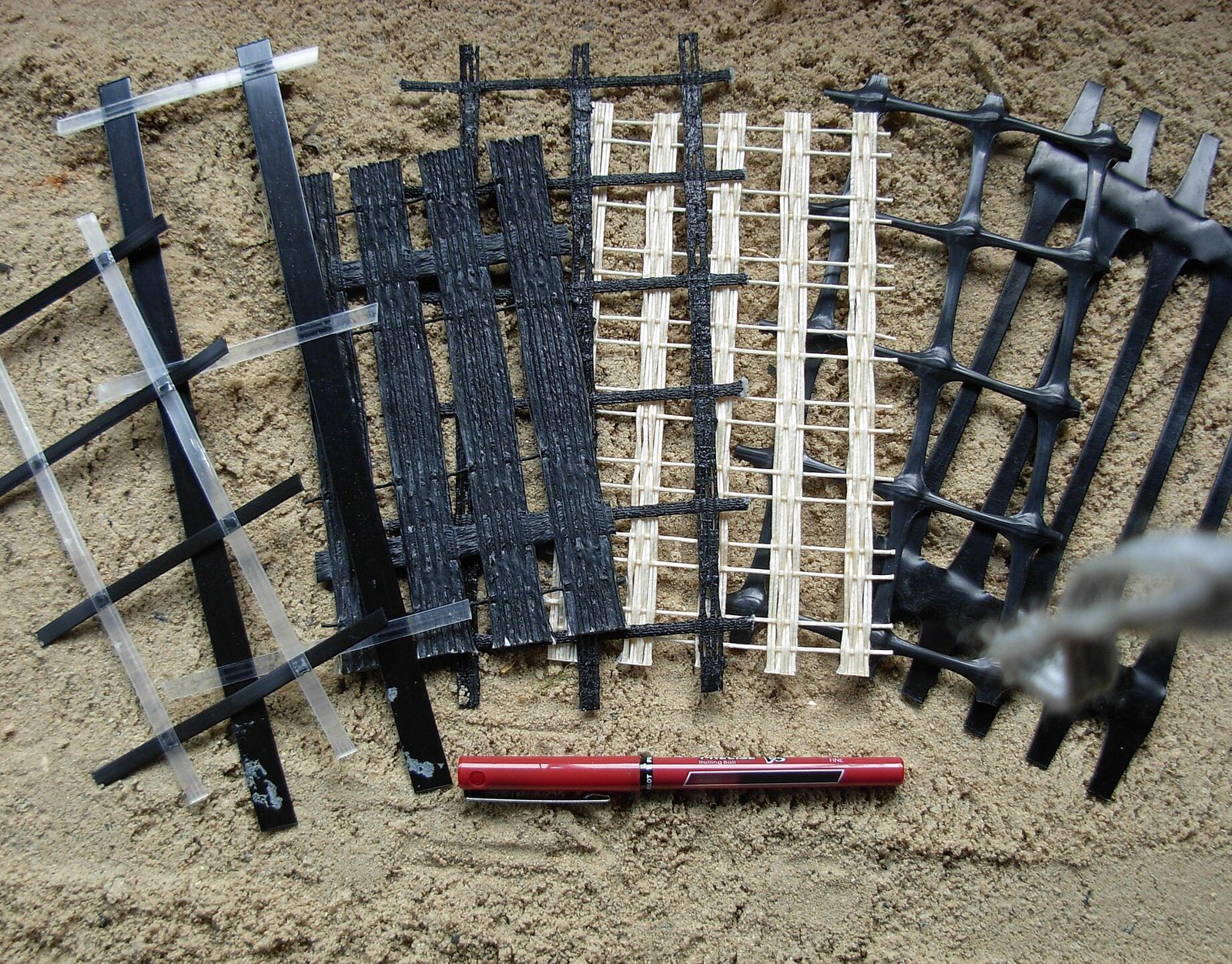
Every month the same email lands in my inbox — a contractor in Nairobi, a landfill engineer in Santiago, a road authority in Manila: "We have found a dozen suppliers of geosynthetics in China. How do we know which ones can actually make the product we need?" The reason every buyer ends up looking at China is no mystery, and it is worth understanding before you spend money.
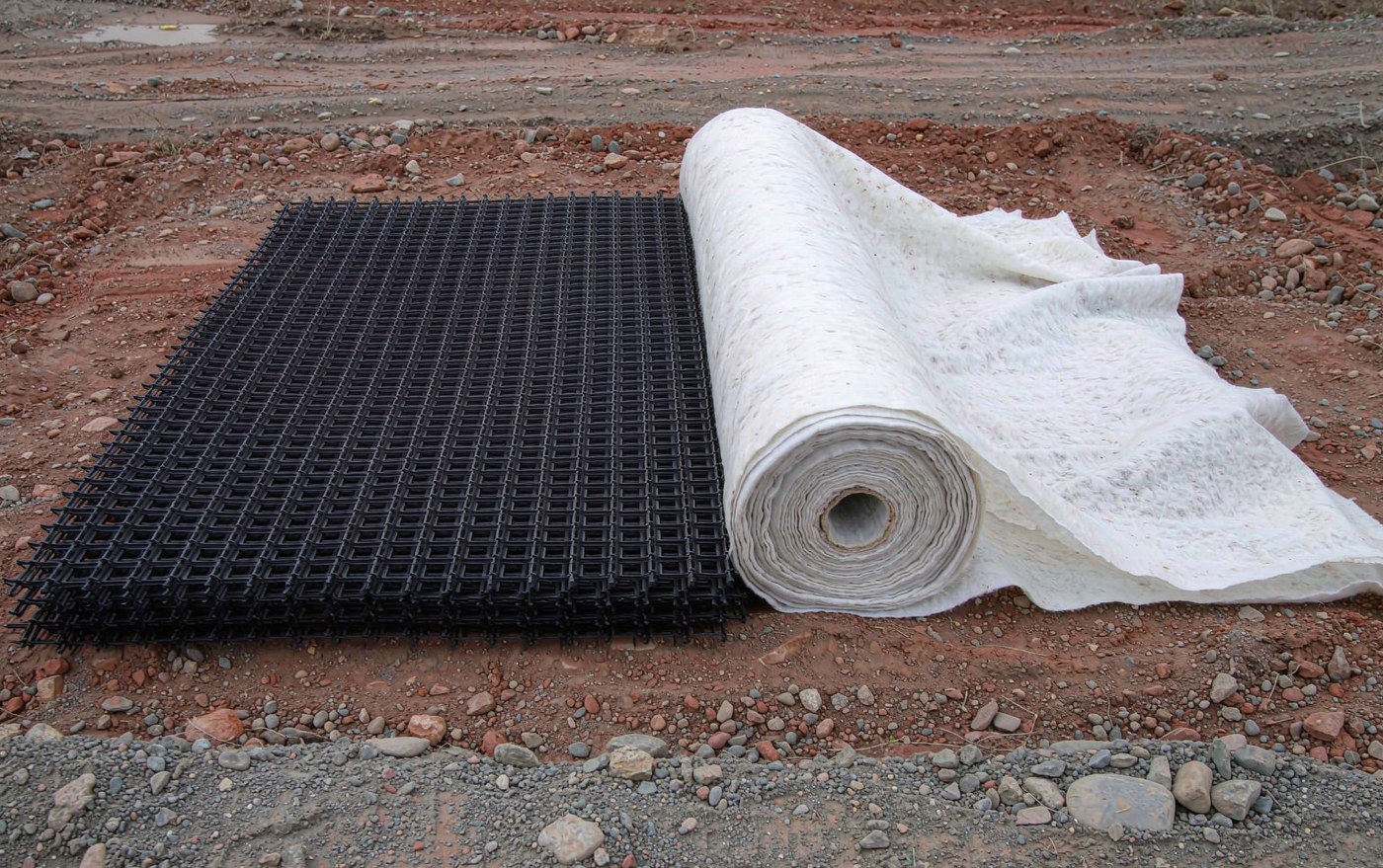
Why China Became the Geosynthetics Supply Centre
Three things sit within a short truck ride of each other in the main production provinces — Shandong, Jiangsu and Hebei:
- Resin and steel wire. HDPE and PP resin, plus the high-tensile wire that goes into steel-plastic geogrid, are made locally and cheaply. A plant does not wait six weeks for an imported coil.
- Every conversion step in one region. Extrusion, punching and drawing, coating, weaving, needle-punching and calendering all happen nearby, so a factory can quote a composite product without shipping semi-finished rolls across a country.
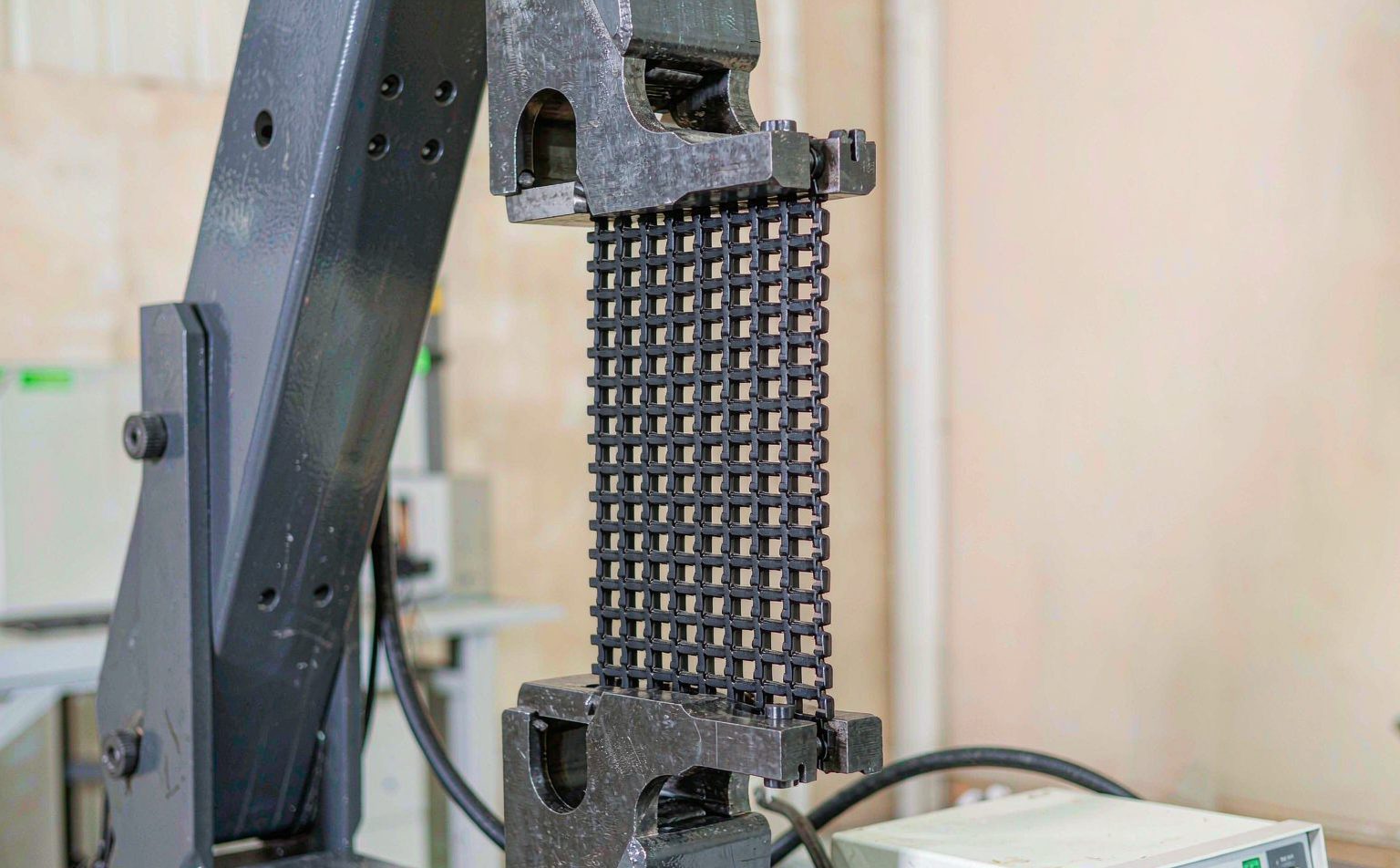
- Testing on site. Tensile frames, CBR puncture rigs and AOS sieve shakers are installed in the plant, not sent out. That is why a real mill can hand you an ASTM D6637 or ISO 10319 report with the roll.
Add deep-water ports and consolidated export paperwork, and the result is what buyers see from outside: one country that can quote the whole range. The catch is that "China" on a quotation tells you nothing about who actually owns the machine.
The China Geosynthetics Export Catalog: Every Product Line
Chinese geosynthetics fall into six material families. A genuine source factory makes most of them from raw resin and wire rather than reselling imported rolls. This is the catalog we quote most often.
| Product line | Key specification | Standard | Main application | Typical MOQ |
|---|---|---|---|---|
| Steel-plastic biaxial geogrid | 30–150 kN/m; aperture 12.7mm / 25.4mm / 38.1mm | ASTM D6637, GB/T 19274 | Road base, working platforms, driveways | 5,000–10,000 m² |
| Steel-plastic uniaxial geogrid | 50–300 kN/m; aperture ≥ 100 mm | ASTM D6637, GB/T 19274 | Retaining walls, steep embankments | 5,000 m² |
| Fiberglass geogrid | 30–100 kN/m; elongation ≤ 4% | ASTM D6637, JTG E50 | Asphalt overlay, reflective cracking | 10,000 m² |
| Self-adhesive fiberglass geogrid | 30–80 kN/m; elongation ≤ 4% | ASTM D6637, JTG E50 | Fast overlay install, tack-coat bonding | 10,000 m² |
| Nonwoven geotextile (PET / PP) | Needle-punched; unit weight made to order | ASTM D4595, AASHTO M288 | Separation, filtration, liner cushion | 10,000 m² |
| Woven geotextile (PP / PET) | Slit-film or yarn; width made to order | ASTM D4595, AASHTO M288 | Reinforcement, silt fence, bagging | 10,000 m² |
| HDPE geomembrane | Smooth or textured; thickness made to order | GRI-GM13, ISO 10319 | Landfill, pond and mining liner | 5,000 m² |
| LLDPE geomembrane | High-elongation liner for settlement | GRI-GM13 | Canal, decorative pond, cap | 5,000 m² |
| Composite geomembrane | Membrane bonded to nonwoven, one or two sides | GRI-GM13, ASTM D4595 | Tunnel, landfill cap, ditch | 5,000 m² |
| Textured geomembrane | Single- or double-side texture | GRI-GM13 | Steep slope lining | 5,000 m² |
| Geocell | HDPE, perforated or textured, custom depth | — | Retaining wall, load support | 3,000 m² |
| GCL (bentonite clay liner) | Sodium bentonite between woven and nonwoven geotextile | — | Canal, landfill base, pond | 3,000 m² |
| Geonet / composite drainage net | HDPE tri-planar or bi-planar, optional geotextile | — | Landfill drainage, gas venting | 5,000 m² |
| 3D erosion control mat (geomat) | UV-stabilised three-dimensional polymer | — | Slope revegetation, channel lining | 3,000 m² |
| Geotextile bag (geobag) | Woven or nonwoven fabric bag | — | Coastal and scour protection | 2,000 pcs |
The gaps matter more than the rows. Two suppliers can both list "biaxial geogrid", but only a plant with its own wire-drawing and HDPE coating line can hold 30–150 kN/m across a full production run and back it with a report. Ask any seller of geosynthetics China to name the machine that makes the roll, and the trading offices go quiet.
Export in Practice: MOQ, Lead Time, Consolidation, Ports and Payment
Once the specification is fixed, export logistics decide the landed cost. This is where buyers lose money — not on the unit price.
- MOQ: most lines open at 5,000–10,000 m²; geocell, GCL and geomat start near 3,000 m².
- Lead time: 7–15 days for stock grades, 20–30 days for custom widths and unit weights. Roll length runs from 30 – 50 m for geogrid up to 100 m for uniaxial grades.
- 拼柜 / consolidation: three product lines loaded into one 40'HQ instead of three separate LCL shipments. Only a single factory can do this, and it is usually the cheapest single change a buyer can make.
- Ports: Qingdao, Shanghai, Tianjin and Ningbo. FOB pricing is quoted from the port nearest the plant, which shaves inland trucking off the quote.
- Payment: 30% deposit by T/T with the balance against a copy of the B/L, or an LC at sight for larger orders.
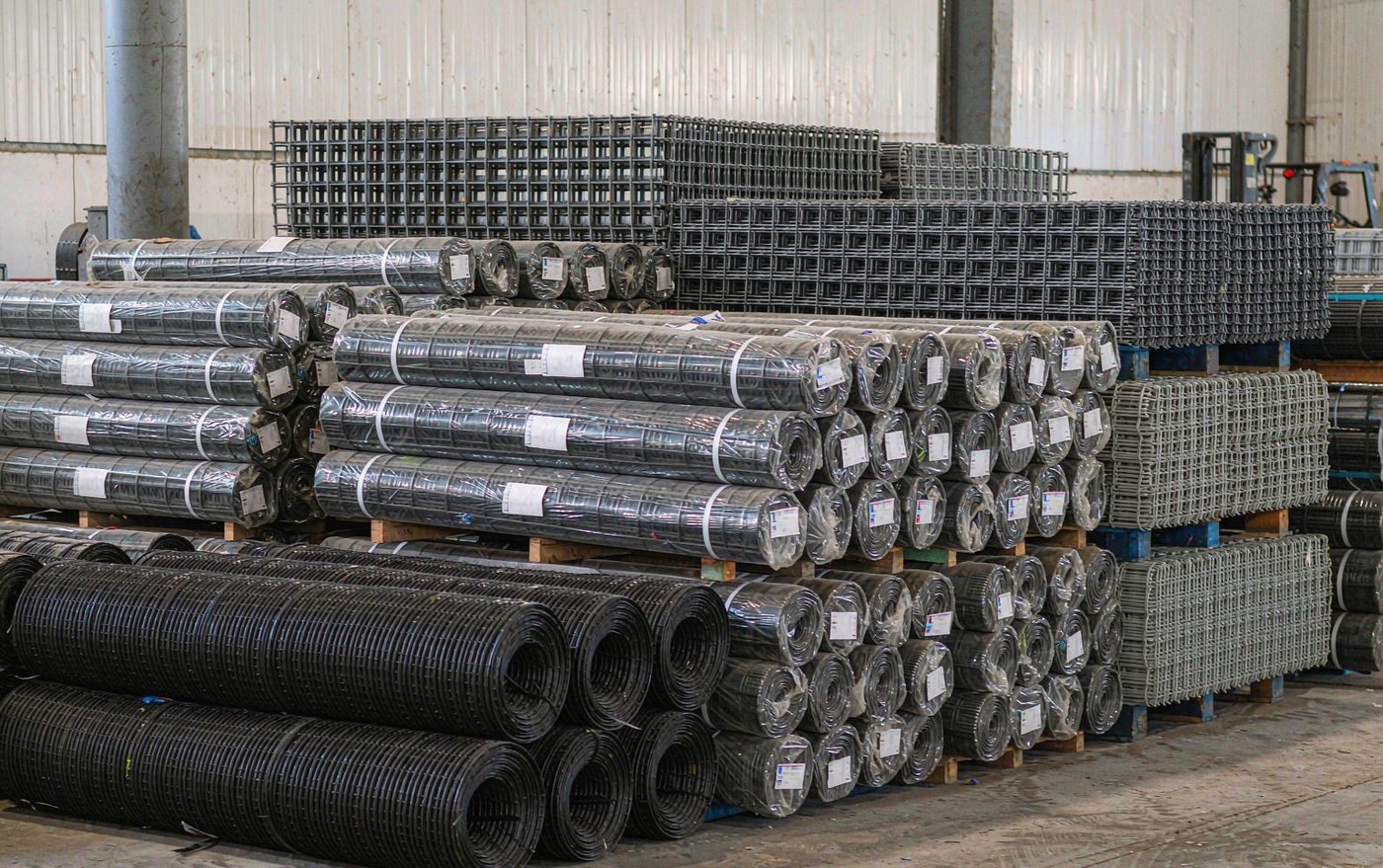
- Packing: rolls stacked on pallets and secured in the container; heavy rolls need a forklift at both ends.
Certifications and the GB vs ASTM / ISO Mapping
Designers rarely specify in the language the factory builds to. Chinese mills test to GB/T and JTG, your drawings call up ASTM or ISO, and the two are close but not identical. Name the method and the quotation stops drifting.
| Your specification | Standard to name | China equivalent | Test method |
|---|---|---|---|
| Geogrid tensile strength | ASTM D6637 | GB/T 19274 | Wide-rib tensile |
| Geotextile wide-width tensile | ISO 10319 | GB/T 15788 | 200 mm × 50 mm strip |
| Puncture resistance | ASTM D6241 | GB/T 14800 | Static CBR punch |
| Apparent opening size (AOS) | ASTM D4751 | GB/T 14799 | Dry sieving |
| Water permittivity | ASTM D4491 | GB/T 15789 | Falling-head |
| Highway geotextile class | AASHTO M288 | JTG E50 | Class 1 / 2 / 3 selection |
| European CE marking | EN 13249–13257 | — | Function-based declaration |
A supplier that answers "our tensile is good" instead of "ASTM D6637, 40 kN/m at 2% strain" is not a source factory. It is a broker.
How to Audit a Factory and Avoid the Common Traps
The fastest way to separate a mill from an office is to ask questions only a maker can answer.
- Ask for a third-party test report against ASTM D4595 for geotextile and ASTM D6637 for geogrid — not a certificate typed in-house.
- Request the raw-material grade: virgin HDPE resin for geomembrane, not recycled flake.
- Ask how many extrusion or weaving lines run, and what their monthly tonnage is.
- Insist on a sample roll before the bulk order, then weld a short geomembrane seam and pull it.
- Check the coating weight on steel-plastic geogrid — it controls how the wire survives alkaline backfill.
We go through this in detail in How to Vet a Geogrid Source Factory, and How to Choose a Reliable Geogrid Supplier in China covers the same ground for supplier screening.
What Buying Source Factory Direct Actually Saves
Four costs stack up on an imported geosynthetics order. Buying direct from the source factory attacks the last two.
| Cost component | Through a trading company | Source factory direct |
|---|---|---|
| Factory gate price | Hidden inside the quote | Visible, quoted per grade |
| Inland trucking to port | Billed as part of the lump | Quoted from the nearest port |
| Intermediary margin | One full markup layer | None |
| Wrong-specification risk | High — the plant never sees your drawing | Low — you specify to the maker |
Here is the arithmetic on a typical job (figures illustrative, not a quotation). If a trader quotes USD 0.55 per m² for a 30 kN/m biaxial grade that leaves the factory at USD 0.42, the gap on 10,000 m² is about USD 1,300. Now add the cost nobody budgets for: when the wrong tensile grade arrives, you pay freight twice and the programme slips by a month. That second number is usually larger than the first, and it is the one factory direct removes.
Choosing the Right Geosynthetics for Your Project
- Product range — see the full geosynthetics product range for every line, tensile grade and roll dimension, including steel-plastic biaxial geogrid and HDPE geomembrane.
- Talk to an engineer — message us on WhatsApp for a same-day technical answer, or email cn8978688@gmail.com.
- Related reading — Geomembrane China: Price, MOQ and Lead Time covers liner cost in detail.
GeoTexGrid Materials Co., Ltd. manufactures geogrid, geotextile, geomembrane, geocell and GCL on our own lines and ships factory direct to projects in more than 40 countries. Send your drawing and design load — you will get a confirmed specification and quotation, usually within one working day.
Artículos relacionados
Fiberglass Geogrid China Supplier: Mesh and Coat
How to vet a fiberglass geogrid China supplier: mesh size, bitumen vs polymer coating, and the rib-count arithmetic that proves a 30-100 kN/m datasheet.
Woven Geotextile China Manufacturer: Slit Film
A woven geotextile China manufacturer explains slit film tapes, the grab-versus-wide-width trap, and how roll width changes the area you pay for.
Geocell China Manufacturer: Perforation Surface
Perforated or textured walls decide how a geocell drains and grips. A geocell China manufacturer explains wall options, weld QC and checks before order.