
Geogrid China: How to Vet a Source Factory Direct
作者 GeoTexGrid Engineering Team
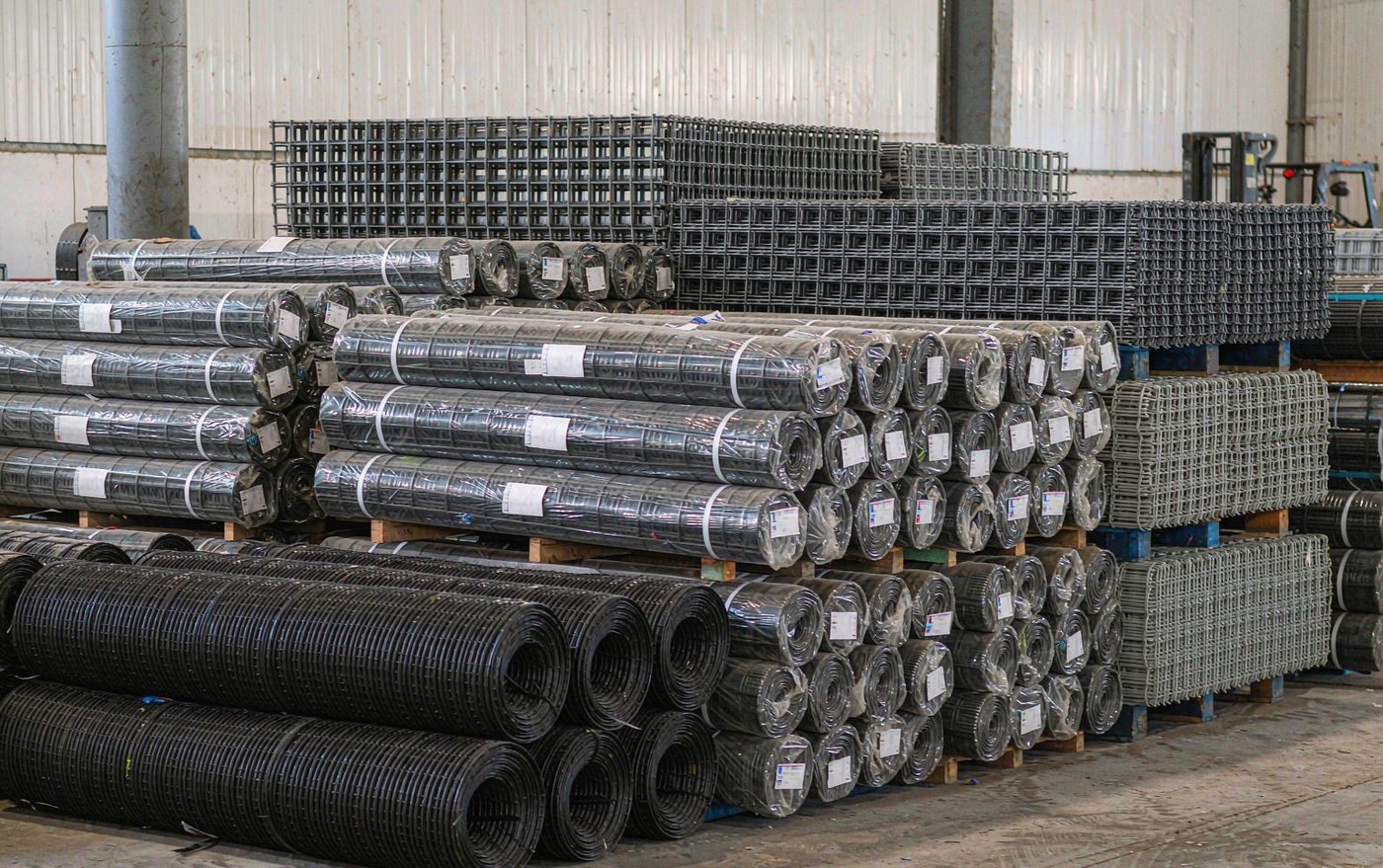
If you've priced road-base reinforcement anywhere in the last five years, you've seen the pattern. The lowest bids almost always trace back to a geogrid China mill — and not just because the resin is cheaper. It's capacity. A mid-size plant here runs several extrusion lines and can coat, punch and roll a 40,000 m² order in the same week a European jobber is still sending the quote.
"Cheap and fast" and "right for your structure" are not the same thing, though. I've watched two shipments with identical catalogue numbers behave completely differently in the field. The difference was almost always what happened before the roll left the building.
A Source Factory, Not a Trading Desk
The first time I ordered biaxial geogrid in volume, the "manufacturer" turned out to be a trading office above a convenience store. The rolls were fine — but every question about resin batch or tensile verification bounced back to a middleman who didn't have the answer. We paid a margin for that silence.
A real source factory owns the line. You can ask for the extrusion parameters and get them. You can request a mill test certificate per lot, not a copy of a copy. And when something is off on site, the person who picks up the phone is the one who ran the machine.
For most buyers the shortest path to that relationship is factory direct — buying from the mill instead of a distributor who re-sells ten brands they don't actually make.
What to Check Before You Send a Deposit
I run a short checklist on every new geogrid China supplier. It isn't exhaustive, but it kills most of the bad ones early.
| Check | What a real source factory shows | Red flag |
|---|---|---|
| Extrusion | Owns the line; names the coating and punching process | "We cooperate with factories" |
| Tensile report | Per-lot ISO 10319 or GB/T 17689 wide-width test | Only a catalogue spec sheet |
| Resin | States virgin PP/HDPE ratio; creep data on request | "Standard material" with no batch ID |
| Roll size | 3.95 m or 4.0 m width, stated length ±2% | Vague "about 50 m" |
| MOQ & lead time | 5,000–10,000 m², 7–15 days for stock grades | One-roll MOQ with a "3-month" vague ETA |
A mill test certificate I actually trust carries three things: the lot number, the measured tensile in both directions, and the test standard printed on the page — not just referenced in a footnote. If every lot in the PDF shows the same rounded number, that's the catalogue again. Ask for the certificate of the specific lot you're about to receive, and match the lot number on the roll's shrink-wrap to it before the truck is unloaded.
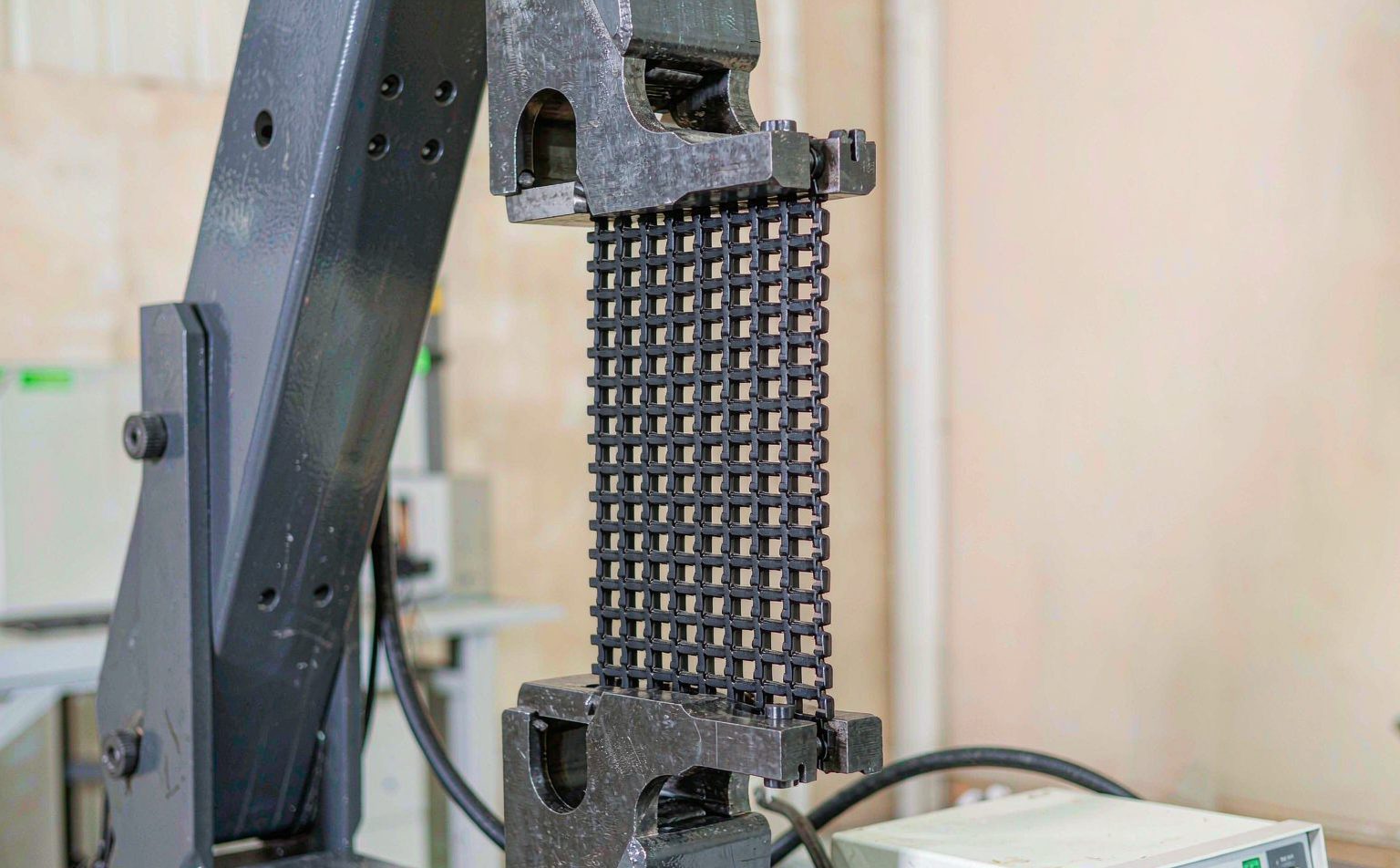
The tensile number matters most. Biaxial grades you'll actually specify run from about 20 kN/m up to 80–150 kN/m in the strong direction. If a quote lands well under roughly $0.35 per m² for a 20 kN/m biaxial, ask what resin they used — reclaimed material shows up there first, and it creeps.
Red Flags I've Learned to Spot
A few have cost me time:
- No lot-level mill certificate. Catalogue tensile strength is a sales number. The roll you get should carry its own test.
- Refuses third-party inspection. SGS or BV at the warehouse is normal for a serious order. A source factory used to it won't flinch.
- Price that breaks the floor. Below the resin-plus-coating cost, something in the specification moved. Find out what before you commit.
Matching the Geogrid China Spec to the Job
Not every geogrid China mill makes every type well. Rough guide:
- Biaxial geogrid China — road base, working platforms, driveways. Load spreads in two directions.
- Uniaxial geogrid China — retaining walls, steep slopes. Strength runs one way, along the wall.
- Fiberglass geogrid China — asphalt overlay, reflective-crack control. Different polymer system entirely.
Whether you need biaxial geogrid China for a highway base or uniaxial geogrid China for a 10 m wall, the source factory should quote the exact tensile grade — not a one-size number.
Creep is the quiet one. A grid that holds the load today can stretch permanently under sustained road weight, so ask for the 100,000-hour creep-reduced strength, not just the short-term peak. A source factory that runs its own long-term creep rig will hand you that curve without hesitating.
If you're not sure which, the geogrid product range lists the tensile grades and roll dimensions we keep in stock, and Biaxial Geogrid for Road Base Reinforcement walks through the design side.
Vet the Plant the Same Way You Vet the Spec
The product and the factory are one decision. Ask for the test report, name the standard, and confirm the line is theirs. Do that, and buying geogrid China stops being a gamble and becomes a line item you can defend to the engineer.
Choosing the Right Geogrid for Your Project
- Product range and data sheets — see the full geogrid product range for tensile grades and roll dimensions.
- Talk to an engineer — message us on WhatsApp for a same-day technical answer, or email cn8978688@gmail.com.
- Related reading — Biaxial Geogrid for Road Base Reinforcement explains how the grid cuts aggregate thickness on weak subgrade.
GeoTexGrid runs its own extrusion lines and ships factory direct from the source, so your drawing and design load come back as a confirmed specification and quotation, usually within one working day.
相关文章
Fiberglass Geogrid China Supplier: Mesh and Coat
How to vet a fiberglass geogrid China supplier: mesh size, bitumen vs polymer coating, and the rib-count arithmetic that proves a 30-100 kN/m datasheet.
Woven Geotextile China Manufacturer: Slit Film
A woven geotextile China manufacturer explains slit film tapes, the grab-versus-wide-width trap, and how roll width changes the area you pay for.
Geocell China Manufacturer: Perforation Surface
Perforated or textured walls decide how a geocell drains and grips. A geocell China manufacturer explains wall options, weld QC and checks before order.