
Composite Geomembrane: One-Side vs Two-Side Liner Design
Por GeoTexGrid Engineering Team
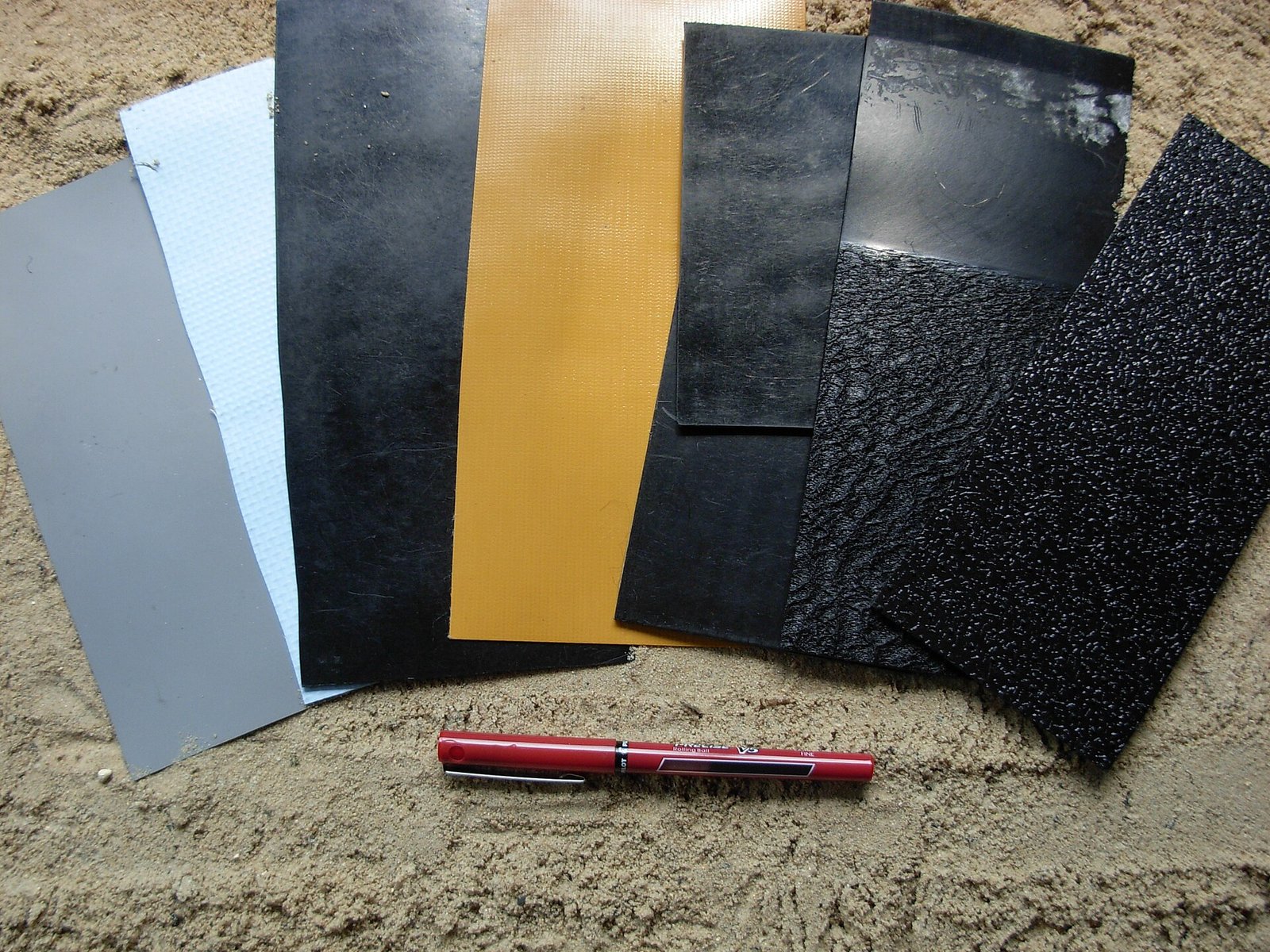
A geomembrane is only as durable as the layer pressed against the ground beneath it. A composite geomembrane solves that problem at the factory: an HDPE barrier sheet is bonded to a nonwoven geotextile before it leaves the plant, so protection, barrier and friction arrive on site in one roll, under one quality record. This guide explains the one-side and two-side structures, where each fits, how to calculate what you are actually shipping, and which specification lines decide whether the lining system holds.
What a Composite Geomembrane Actually Is
The structure is exactly what the product data line says: Membrane + nonwoven geotextile (1-side / 2-side). The membrane is High-density polyethylene (HDPE) — the same barrier resin offered standalone with Smooth / textured available — and the bonded layer is a Needle-punched nonwoven (PET / PP) laminated onto it by heat in the plant, not improvised on site.
That factory bond is the whole point. On a traditional lined cell, crews place a loose nonwoven protection fabric first, then deploy the membrane over it. In a composite roll the two layers cannot be separated: the geotextile face goes down against the subgrade, the bare membrane face stays up so panels can be wedge or extrusion welded, and a clean unbonded strip is left along each panel edge for the seam. The roll you receive is barrier and protection in one deployment pass.
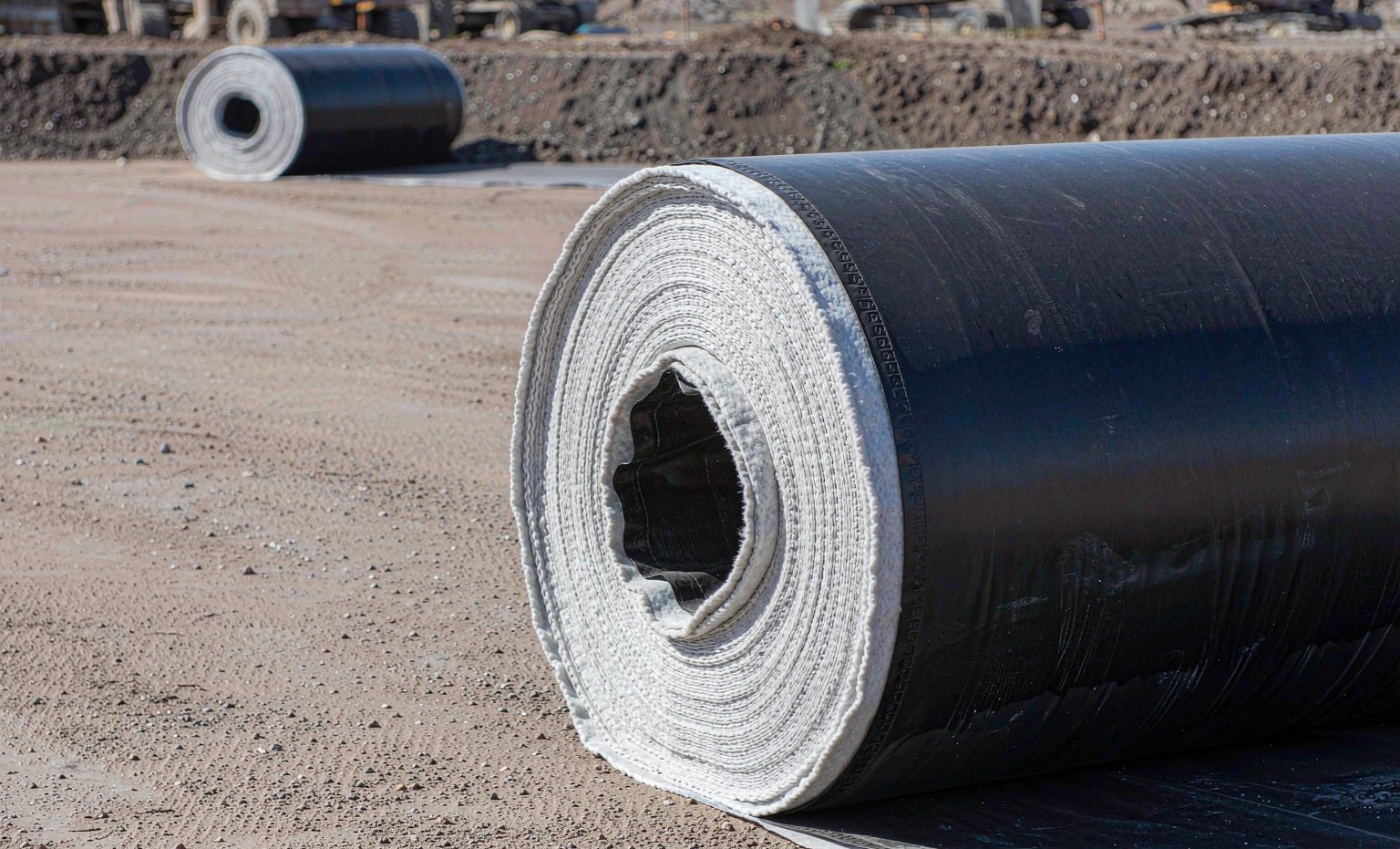
One-Side vs Two-Side: Where Each Structure Fits
| Product | Structure as supplied | What the bonded or added layer does |
|---|---|---|
| Composite geomembrane | Membrane + nonwoven geotextile (1-side / 2-side) | Puncture cushion, added friction and a cleaner interface in one roll |
| HDPE geomembrane | High-density polyethylene (HDPE), Smooth / textured available | Pure barrier; needs a separate protection geotextile placed under it |
| Textured geomembrane | HDPE, textured surface (Single-side / double-side) | Interface friction on slopes, no protection function |
| GCL | Sodium bentonite between woven and nonwoven geotextile | Self-healing low-permeability layer, not a welded barrier |
| Nonwoven geotextile, loose | Needle-punched nonwoven (PET / PP) | Standalone protection or filtration layer, can be displaced |
Two rules decide between them:
- One-side composite fits liners where only the subgrade side is aggressive: canal beds, reservoir bases and pond floors on prepared soil. The bonded fabric cushions stones and construction traffic from below while the membrane stays exposed for welding and inspection.
- Two-side composite fits liners that get buried: landfill caps, ore and tailings facilities where cover material is placed over the barrier, and any base where the membrane contacts abrasive material on both faces. The second bonded layer protects the membrane while the cover is spread and compacted on top of it.
If the driving problem is slope friction rather than puncture, a textured geomembrane may be the leaner answer; if it is self-healing against a variable subgrade, a GCL belongs in the section. The composite earns its cost when you want barrier and protection delivered — and installed — as one verified unit.
Why Bond the Geotextile Instead of Placing It Separately
- No displaced protection layer. A loose geotextile can be pushed by wind, folded during membrane deployment or skipped entirely in an unattended corner. A bonded layer physically cannot migrate before the membrane goes down.
- One pass, fewer QA records. Deployment covers two functions at once, so the inspection walk is shorter and the delivery paperwork carries one certificate instead of two products that must be matched roll by roll.
- A working interface. The fabric side retains in-plane transmissivity, so gas and seepage water can travel along the subgrade interface toward vents instead of blistering the membrane.
- Friction you can test. The bonded face raises interface friction against the subgrade; where the slope is steep, verify the number with interface shear testing per ASTM D5321 rather than assuming it.
Composite Geomembrane Specification Checks That Matter
Check the mass you are actually shipping. HDPE has a density near 0.94 g/cm³, so every 1.0 mm of membrane adds roughly 0.94 kg/m². A 1.0 mm membrane with a 300 g/m² nonwoven bonded on one side ships at about 1.24 kg/m²; the same membrane with 300 g/m² on both sides is about 1.54 kg/m². On a 5.8 m × 50 m roll — 290 m² — that is roughly 447 kg for a two-side roll. That number decides whether a crew unloads the truck by hand or by machine, and it is cheaper to know before the delivery is scheduled than after.
Make the bonded geotextile meet the protection class. Because the bonded fabric replaces the loose protection layer, it must satisfy the same strength requirement that layer would have. Under AASHTO M288, a protection geotextile at Class 1 requires a static CBR puncture resistance of 2,750 N (elongation < 50%), tested per ASTM D6241. If angular drainage gravel will be pushed across the liner, that is the number the nonwoven component has to hit — and you check it on the composite's own geotextile certificate, not on a separate geotextile datasheet that no longer exists in the supply chain.
Keep the two certificates separate in your head. Membrane properties (thickness, tensile at yield and break, tear and puncture) are governed by GRI-GM13 for HDPE; the geotextile component is tested on its own under ASTM D4595 for wide-width tensile. A supplier who can produce both certificates, roll by roll, is the minimum bar for a composite supply.
Failure Modes and What They Point To
| Symptom on site | Failure mode | Specification line to check |
|---|---|---|
| Puncture holes after gravel placement | Bonded nonwoven too light for angular stone | CBR puncture per ASTM D6241 against the AASHTO M288 class |
| Seam peel or shear failures | Seaming strip contaminated or too narrow | Clean bare-membrane strip width; seam integrity per ASTM D4437 |
| Blisters under the membrane | Gas or water trapped at the subgrade interface | Venting layer or drainage geonet beneath the liner |
| Liner creeping down a steep slope | Interface friction lower than design assumed | Interface shear per ASTM D5321; textured or composite face selection |
| Soil loss or clogging at overlaps | Opening size mismatch with the soil | AOS of the geotextile component per ASTM D4751 |
Most composite liner problems trace back to one of two shortcuts: treating the bonded fabric as decorative (it is the protection layer, and it must be specified like one) or welding across a strip that was not kept clean and bare. Both are caught by reading the certificate and walking the seam before cover material arrives — not after.
Where to Go Next
- Product range and data sheets — see the full composite geomembrane specification, or compare it against the HDPE geomembrane and nonwoven geotextile range for a build-up of separate layers.
- Talk to an engineer — message us on WhatsApp for a same-day technical answer, or email cn8978688@gmail.com with your cross-section and cover depth.
- Related reading — Geomembrane for Mining: Heap Leach Pad Liner Design shows how liners are selected for aggressive containment, and Nonwoven Geotextile as Landfill Liner Protection explains the loose-layer alternative the composite replaces.
GeoTexGrid manufactures composite geomembrane in one-side and two-side builds, with membrane thickness and geotextile mass matched to your subgrade and cover design. Send your cross-section and the loads over the liner — you will get a confirmed specification and quotation, usually within one working day.
Artículos relacionados
Fiberglass Geogrid China Supplier: Mesh and Coat
How to vet a fiberglass geogrid China supplier: mesh size, bitumen vs polymer coating, and the rib-count arithmetic that proves a 30-100 kN/m datasheet.
Woven Geotextile China Manufacturer: Slit Film
A woven geotextile China manufacturer explains slit film tapes, the grab-versus-wide-width trap, and how roll width changes the area you pay for.
Geocell China Manufacturer: Perforation Surface
Perforated or textured walls decide how a geocell drains and grips. A geocell China manufacturer explains wall options, weld QC and checks before order.